 English
 Pусский
 Français
 Español
When a disposable cup production line begins operating at high speed, even small installation mistakes can create major long-term production problems. Misaligned feeding systems, unstable heating temperatures, or inconsistent rotary synchronisation often lead to paper waste, leakage issues, and unnecessary downtime.
Many manufacturers focus heavily on maximum speed figures during equipment selection. However, experienced factory managers know that stable operation matters far more than theoretical output capacity.
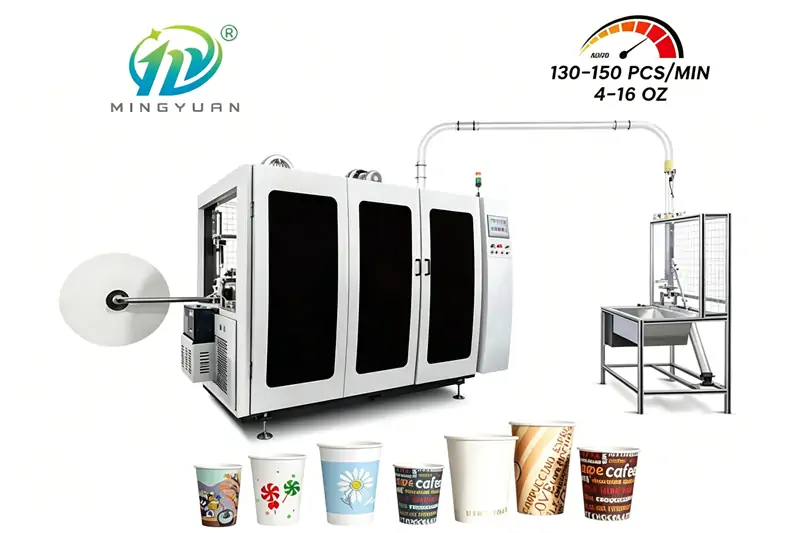
This guide explains how production teams typically set up a high-speed double turntable system for long-term efficiency, stable cup quality, and smoother daily operation.
Start with Production Layout Planning
Before installation begins, the workshop layout should be evaluated carefully. High-speed forming systems require more than empty floor space. They also depend on proper airflow, stable electrical supply, efficient paper handling, and organised operator movement.
Experienced factories usually inspect:
- Air compressor stability
- Electrical load consistency
- Paper storage humidity
- Finished cup collection pathways
- Maintenance clearance space
- Waste removal efficiency
Poor layout planning often creates hidden inefficiencies that reduce productivity long before the machine reaches its designed operating speed.
Many factories are expanding output capacity. First, review high-output forming line layouts designed for continuous cup production to avoid workflow bottlenecks during future production scaling.
Synchronise the Double Turntable System Carefully
In dual rotary production systems, synchronisation accuracy directly affects product consistency.
Even small timing deviations between turntables may cause:
| Issue | Possible Cause | Production Impact |
| Cup body deformation | Feeding timing mismatch | Higher rejection rate |
| Bottom leakage | Incorrect sealing pressure | Customer complaints |
| Rim cracking | Uneven heating | Poor stacking performance |
| Cup sticking | Delayed release timing | Output interruption |
Experienced technicians rarely run a new system at full speed immediately after installation. Instead, they gradually increase operating speed while monitoring synchronisation behaviour and forming accuracy.
This staged adjustment process helps identify mechanical alignment issues before large-scale defects appear.
Adjust Feeding Parameters Based on Paper Material
Different paper materials react differently during high-speed feeding and forming.
For example:
- PE-coated paper may require different tension settings
- Thin-wall paper can deform under excessive pressure
- Kraft materials often need longer heating stabilisation
- Ripple-wall structures require more accurate alignment
Factories handling multiple cup sizes usually create separate operating presets for each material specification instead of using one universal configuration.
This becomes especially important when production lines frequently switch between beverage cup sizes during peak seasonal demand.
To improve production flexibility, some manufacturers study modular production solutions for flexible cup size conversion before upgrading their forming lines.
Optimise Heating and Bottom Sealing Stability
Bottom sealing quality remains one of the most critical factors in disposable cup manufacturing.
According to packaging quality control practices used across the food-service industry, improper thermal sealing is one of the leading causes of liquid leakage during transportation and storage.
Several variables affect sealing consistency:
- Heater response speed
- Ambient workshop temperature
- Compression timing
- Cooling duration
- Coating consistency of raw materials
Experienced operators usually adjust sealing parameters according to environmental conditions rather than relying on fixed temperature settings year-round.
For example, colder workshops may require additional warm-up time before stable production can begin.
Train Operators to Detect Early Mechanical Problems
Even a properly installed system can lose efficiency if operators fail to recognise early warning signs.
Experienced production teams typically monitor:
- Abnormal vibration sounds
- Delayed cup release timing
- Servo response instability
- Irregular feeding movement
- Temperature fluctuation alarms
- Lubrication inconsistencies
Preventive monitoring is often far more cost-effective than emergency maintenance shutdowns.
Factories transitioning from semi-automatic workflows often compare automated forming systems designed for continuous industrial operation before scaling production further.
Common Startup Mistakes That Reduce Efficiency
Several installation mistakes repeatedly appear during the first production week.
Running at Maximum Speed Too Early
Newly installed systems need gradual load testing. Immediate full-speed production may increase wear before calibration stabilises.
Ignoring Air Pressure Stability
Even minor fluctuations in compressed air pressure can affect cup release timing and bottom forming quality.
Over-Lubricating Rotary Components
Excess lubrication attracts paper dust, increasing mechanical resistance and maintenance frequency.
Skipping Continuous Quality Sampling
Cup inspection should continue throughout startup operations instead of checking only the first production batch.
Stable Output Matters More Than Advertised Speed
Many factories initially focus on production speed specifications when evaluating new equipment. However, experienced manufacturers often prioritise:
- Stable hourly output
- Lower rejection rates
- Reduced downtime
- Easier maintenance scheduling
- Consistent sealing quality
A production line operating slightly below maximum speed with reliable consistency often generates better long-term profitability than an unstable line pushed to its limit.
Manufacturers planning long-cycle production upgrades frequently evaluate detailed production configurations and automation options before making investment decisions.
Final Thoughts
Setting up a high-speed double turntable production system is not simply an installation process. It requires careful coordination between synchronisation accuracy, feeding stability, thermal sealing performance, and operator training.
Factories that invest time in proper setup and calibration usually experience:
- Lower defect rates
- Longer component lifespan
- More stable production schedules
- Better energy efficiency
- Improved product consistency
As global demand for disposable beverage packaging continues growing, operational stability is becoming just as important as production speed.
References & Industry Notes
- ISO 9001 Quality Management Principles
- ASTM standards related to paper packaging performance testing
- General manufacturing observations based on common disposable cup production workflows
- Industry maintenance practices referenced from automated packaging equipment guidelines