 English
 Pусский
 Français
 Español
Table of Contents
- What should a paper cup production line solve?
- The practical workflow from fan to packed cup
- Production line options for different factories
- How to calculate line balance
- When to add printing and die cutting
- When packing becomes the bottleneck
- Workshop space and cash-flow planning
- A staged production line timeline
- Common planning mistakes
- Line planning checklist
- Frequently asked questions
- The Bottom Line
What Should a Paper Cup Production Line Solve?
-1317.png)
A paper cup production line should help a factory turn paper cup fans into packed, saleable cups with stable quality, controlled labor, and predictable delivery. It is not only a group of machines placed in a workshop. It is a workflow that connects material supply, printing, die cutting, forming, inspection, counting, packing, and shipment.
For many buyers, the real problem is not whether cups can be formed. The harder question is whether the factory can produce the right cup sizes, avoid material waste, keep up with packing, and deliver repeat orders without cash pressure. A well-planned paper cup production line should remove the main bottleneck instead of adding equipment too early.
The best line is not always the biggest line. The best line is the one that matches order volume, product mix, operator capability, material control, and packing demand.
The Practical Workflow from Fan to Packed Cup
A practical paper cup workflow begins before the forming machine. The factory needs paper cup fan raw material, either purchased ready-made or prepared through printing and die cutting. After forming, the cups still need inspection, counting, bagging, sealing, carton packing, storage, and delivery. Each stage affects cost and delivery time.
).png)
| Workflow Stage | Main Decision | Buyer Benefit When Planned Well |
|---|---|---|
| Paper cup fan supply | Buy ready fans or prepare fans in-house | More stable material cost and fewer production stops |
| Printing and die cutting | Add upstream equipment only when orders justify it | Better control over branded cup lead time |
| Cup forming | Match machine speed with real order demand | Stable saleable output and lower rejects |
| Counting and packing | Manual, semi-automatic, or automatic packing | Reduced labor pressure and fewer delivery delays |
| Carton and delivery | Standardize packing quantity and stock rules | Cleaner inventory and easier repeat orders |
Production Line Options for Different Factories
Paper cup production line equipment should be selected according to business maturity. A startup may need a compact forming setup first. A distributor with existing sales may need forming and packing together. An existing factory with branded cup orders may need a paper cup printing die cutting forming line to control lead time and material supply.
).png)
| Line Option | Best Fit | Main Limitation |
|---|---|---|
| Forming only | Startup factory testing local demand | Depends on ready fan suppliers and manual packing |
| Paper cup forming and packing line | Factories with repeated volume and labor pressure | Packing style must match customer requirements |
| Printing, die cutting, and forming line | Branded cup producers with stable artwork demand | Higher management requirement and setup cost |
| Automatic paper cup production line | Mature factories with predictable high-volume orders | Unused capacity if sales channels are not ready |
How to Calculate Line Balance
A production line is balanced when each stage can support the stage before and after it. If the forming machine makes more cups than workers can pack, the line is not balanced. If printed fans cannot arrive on time, the forming capacity is not useful. Buyers should calculate balance with conservative numbers.-1318.png)
Line balance formula
Line capacity = the lowest saleable output among fan supply, forming, inspection, packing, and carton preparation
For example, if forming can produce 35,000 accepted cups per shift but packing can only finish 24,000 cups, the real line capacity is closer to 24,000 cups. The extra forming capacity becomes waiting inventory, additional handling, and possible delivery confusion. The bottleneck decides the real output, not the fastest machine in the room.
When to Add Printing and Die Cutting
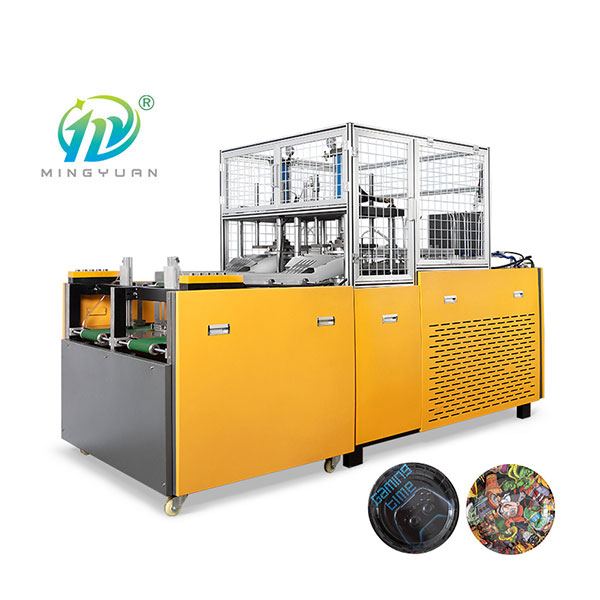
Upstream printing and die cutting can improve control over paper cup fan cost, artwork timing, and custom branded cup supply. But they should not be added only because they look like a complete solution. The factory needs enough repeated printed orders, staff discipline, material storage, and sample approval rules.
-1322.png)
- Add upstream equipment when printed fan delivery time limits sales.
- Add it when repeated branded orders justify setup waste and operator cost.
- Delay it when most orders are plain cups or uncertain short-run designs.
- Control artwork approval before accepting custom printed production.
When Packing Becomes the Bottleneck
-1323.png)
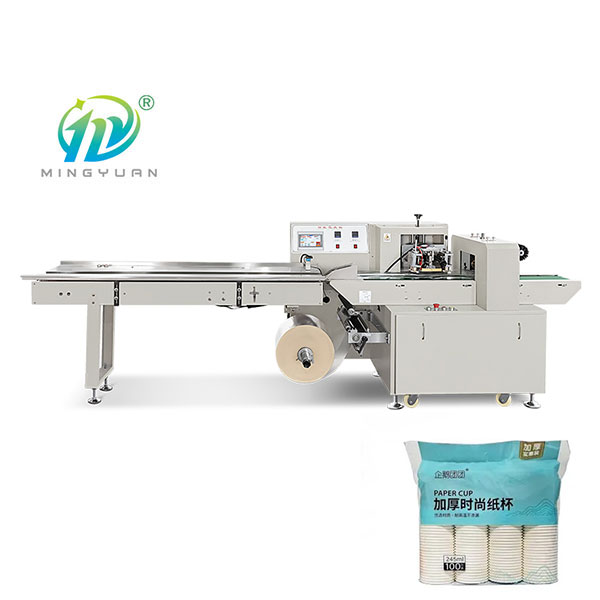
A paper cup machine with packing machine becomes attractive when manual counting, bagging, and sealing cannot keep up with forming output. Packing is not a small detail. It affects labor cost, delivery speed, carton accuracy, and customer confidence. A factory may have enough formed cups but still miss delivery because cups are waiting for packing.
Packing automation should be considered when workers spend too much time counting cups, packing quantity errors become common, or repeat customers require stable bag and carton standards. It is especially useful for distributors and factories selling standard cup quantities every week.
Practical warning: If packed cups per shift are lower than accepted formed cups per shift, downstream packing is already limiting the line.
Workshop Space and Cash-Flow Planning
A paper cup production line also needs space and working capital. Buyers often calculate the machine footprint but forget raw paper storage, printed fan storage, bottom paper, bags, cartons, spare parts, rejected material, and finished goods waiting for shipment. If the workshop flow is crowded, workers spend more time moving products than controlling quality.
Cash flow is equally important. A factory may need to buy paper before receiving payment from customers. Printed paper cup fans can lock more cash because they are customer-specific. Packing materials and cartons also need inventory. A line that is technically complete can still create pressure if material purchases grow faster than confirmed orders.
).png)
| Planning Area | What to Reserve | Why It Matters |
|---|---|---|
| Raw material area | Paper rolls, sheets, fans, and bottom paper | Prevents material damage and production waiting time |
| Production flow | Clear path from forming to inspection and packing | Reduces handling labor and mixed-product mistakes |
| Finished goods | Packed bags and cartons by order or SKU | Improves shipment accuracy and inventory control |
| Working capital | Material, packaging, spare parts, and order cycle cash | Keeps production stable when customers pay later |
A Staged Production Line Timeline
-1325.png)
- Days 1-15: Confirm demand. Identify cup sizes, customer groups, monthly consumption, and acceptable delivery time.
- Days 16-30: Plan material supply. Decide whether to buy paper cup fans first or prepare an upstream upgrade later.
- Days 31-60: Test forming and inspection. Focus on accepted output, leakage control, cup shape, and operator routine.
- Days 61-90: Stabilize packing. Measure packed cups per shift and fix counting, bagging, and carton bottlenecks.
- After stable orders: Upgrade selectively. Add printing, die cutting, packing, or another forming machine based on measured bottlenecks.
Common Planning Mistakes
- Buying a complete line before confirming repeat cup orders.
- Choosing forming speed without checking fan supply and packing capacity.
- Adding too many cup sizes and creating slow-moving fan inventory.
- Assuming printing equipment is necessary before branded orders are stable.
- Ignoring carton space, storage space, and finished goods movement.
- Treating inspection as optional instead of a profit protection step.
-1325.png)
Line Planning Checklist
- List target cup sizes, material structure, and monthly sales estimate.
- Calculate conservative saleable output for each shift.
- Confirm whether paper cup fans will be purchased or produced in-house later.
- Measure whether packing can match forming output.
- Prepare inspection rules for leakage, rim shape, side sealing, and stacking.
- Plan workshop flow from raw material storage to finished carton storage.
- Upgrade the stage that creates the clearest measured bottleneck.
Frequently Asked Questions
Does every buyer need a complete paper cup production line?
No. Many startups should begin with forming and ready paper cup fans, then add upstream or downstream equipment after orders become stable.
When does an automatic paper cup production line make sense?
It makes sense when the factory has predictable high-volume orders, trained operators, reliable material supply, and packing demand that justifies automation.
Should printing and die cutting be installed before cup forming?
Usually no for a new buyer. Forming and sales validation often come first. Printing and die cutting are stronger investments when custom printed orders are repeated and measurable.
What is the biggest hidden bottleneck?
Packing is often underestimated. Manual counting and bagging can limit the whole line even when forming output is strong.
How should buyers compare line quotations?
Compare the included stages, molds, spare parts, training, output assumptions, packing scope, and upgrade path. A lower quotation may exclude important workflow equipment.
The Bottom Line
A paper cup production line should be planned as a balanced workflow, not as a random collection of machines. The line must match customer orders, cup sizes, material supply, forming capacity, inspection, packing speed, and delivery requirements.
A practical line plan should begin with the buyer's current bottleneck. If material supply is unstable, solve fan sourcing first. If forming output is stable but workers cannot pack fast enough, focus on downstream packing. If branded cup demand is repeated and delivery time is restricted by outside suppliers, then upstream printing and die cutting become easier to justify.
This staged logic protects cash flow because the factory invests where the return is visible. A production line should grow with confirmed orders, not ahead of them without evidence.
It also helps the workshop team prepare operators, storage space, packing materials, and inspection routines before volume increases.
Start with the bottleneck that affects profit today, then upgrade the line stage by stage as orders become stable.
Before buying equipment, map your full workflow from paper cup fan to packed carton. This gives the manufacturer clearer information and helps your factory choose equipment that supports sales, not just production speed.