 English
 Pусский
 Français
 Español
Table of Contents
- What makes a paper cup forming machine stable?
- How does the forming process affect profit?
- Why material fit matters before machine speed
- Common forming defects and business impact
- How to calculate real accepted output
- What inspection points should buyers use?
- Daily routine that protects machine stability
- Which configuration fits different production goals?
- When should a factory upgrade forming capacity?
- Mistakes that increase reject rate
- Pre-purchase stability checklist
- Frequently asked questions
- The Bottom Line
What Makes a Paper Cup Forming Machine Stable?
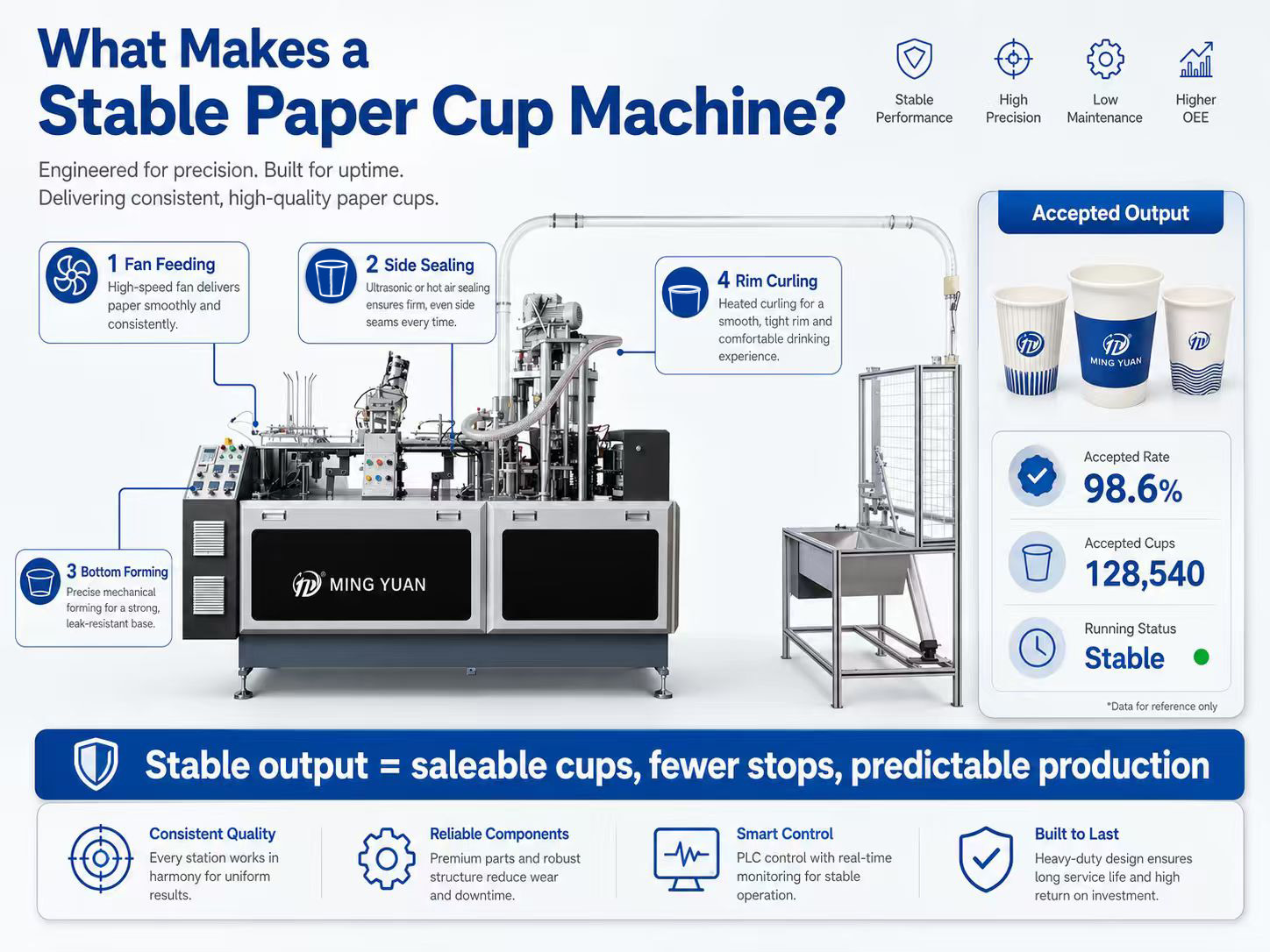
A paper cup forming machine is stable when it can repeatedly feed paper cup fans, seal the side wall, place and seal the bottom, curl the rim, discharge cups, and keep the accepted output within a predictable range during normal production. Stability is not only a mechanical feature. It depends on material quality, mold accuracy, machine adjustment, operator routine, inspection discipline, and downstream packing capacity.
Buyers often compare cup per minute numbers first, but a factory earns money from saleable cups, not from theoretical movement. A machine running fast with frequent stops, leakage, shape defects, or packing delay can create higher waste and lower profit than a slower but more stable setup.
The real value of a forming machine is accepted output per shift after rejects, stops, changeovers, inspection, and packing are considered.
How Does the Forming Process Affect Profit?
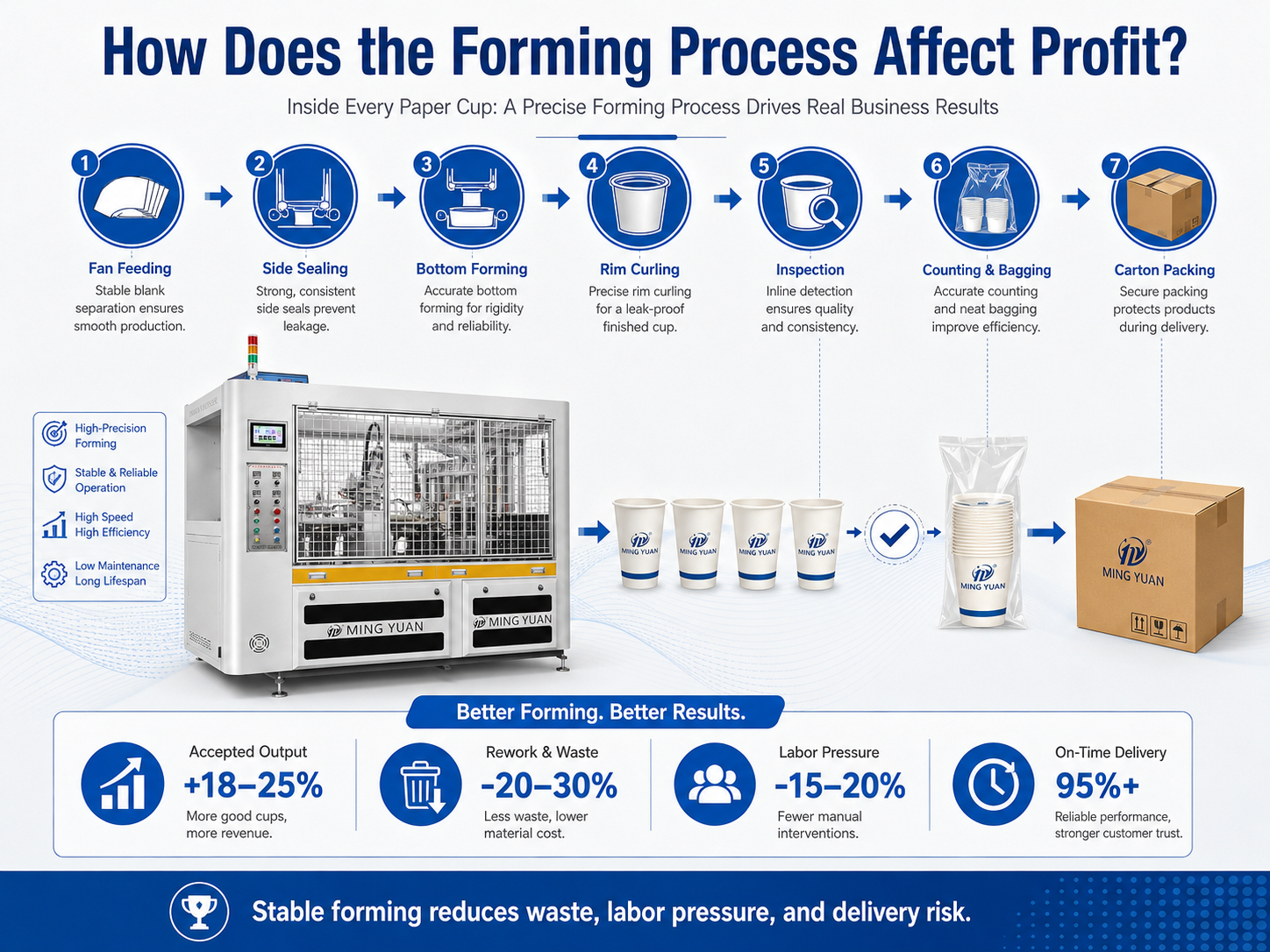
The forming process is the center of a paper cup factory. Upstream paper cup fan preparation provides the blanks, while downstream inspection, counting, bagging, and carton packing turn formed cups into deliverable products. Any weakness in the forming step quickly affects material waste, labor pressure, delivery time, and customer complaints.
| Forming Stage | Main Risk | Buyer Impact |
|---|---|---|
| Fan feeding | Misfeed, double feed, or fan position error | Stops, damaged material, and unstable output |
| Side sealing | Weak seam or poor overlap | Leakage risk and visible quality problems |
| Bottom forming | Bottom paper mismatch or unstable sealing | Rejects, customer complaints, and inspection pressure |
| Rim curling | Uneven rim or shape deformation | Poor appearance and cup stacking issues |
| Cup discharge | Counting or collection pressure | Manual labor increase and packing bottleneck |
Why Material Fit Matters Before Machine Speed
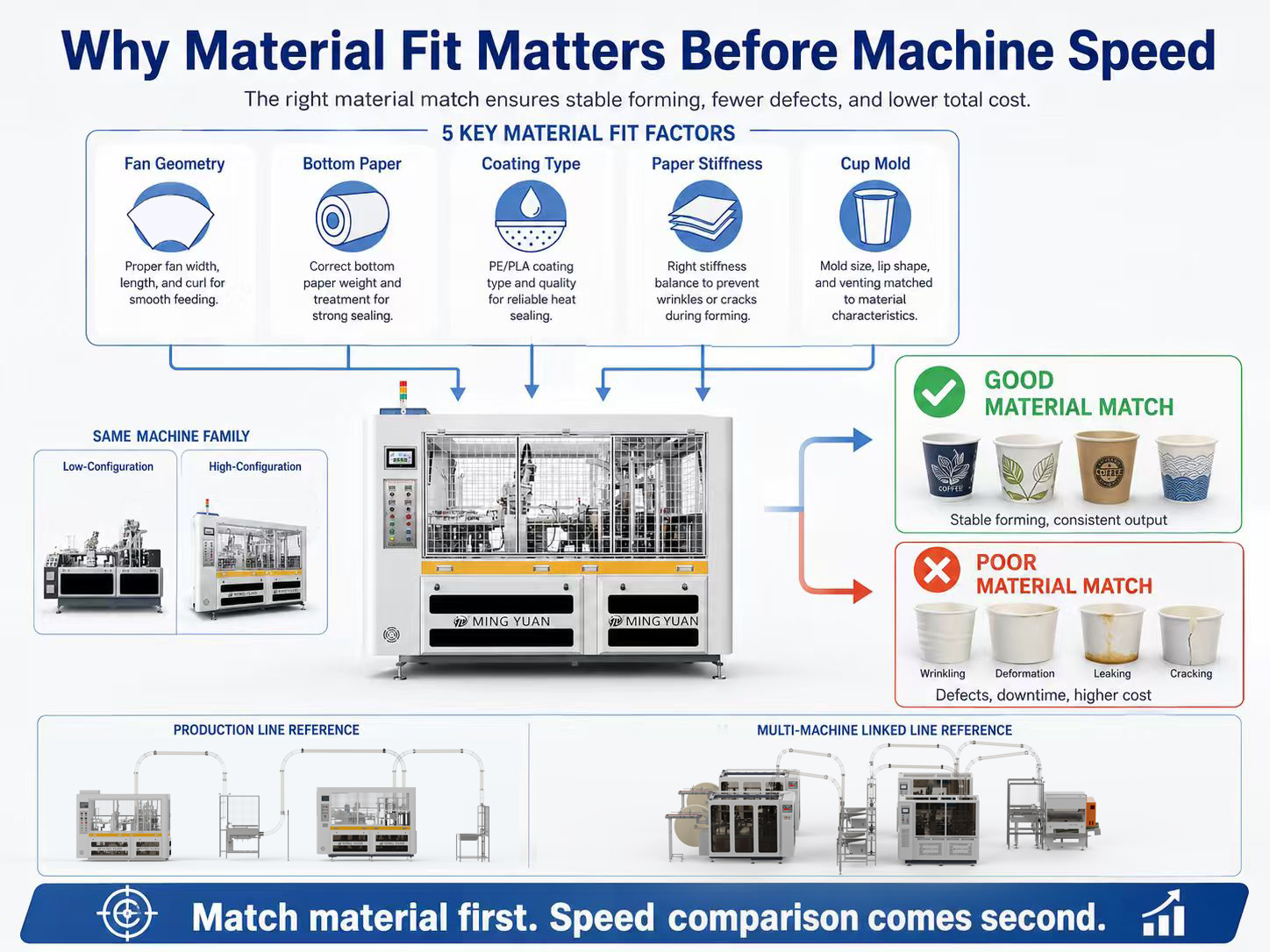
A paper cup production machine can only perform consistently when the paper cup fan, bottom paper, coating, and cup mold are matched. If the fan shape is inaccurate, the coating is inconsistent, the paper stiffness is unsuitable, or the bottom paper is poorly matched, the machine may require frequent adjustment even if its mechanical structure is strong.
Material fit should be checked before speed comparison. A buyer planning to produce coffee cups, tea cups, water cups, or takeaway drink cups should confirm paper weight, coating type, coating side, fan geometry, bottom paper width, and expected storage conditions. These details influence feeding, sealing, cup shape, and reject rate.
Practical rule
Test the forming machine with material close to real production material, not only with ideal demonstration samples.
Common Forming Defects and Business Impact
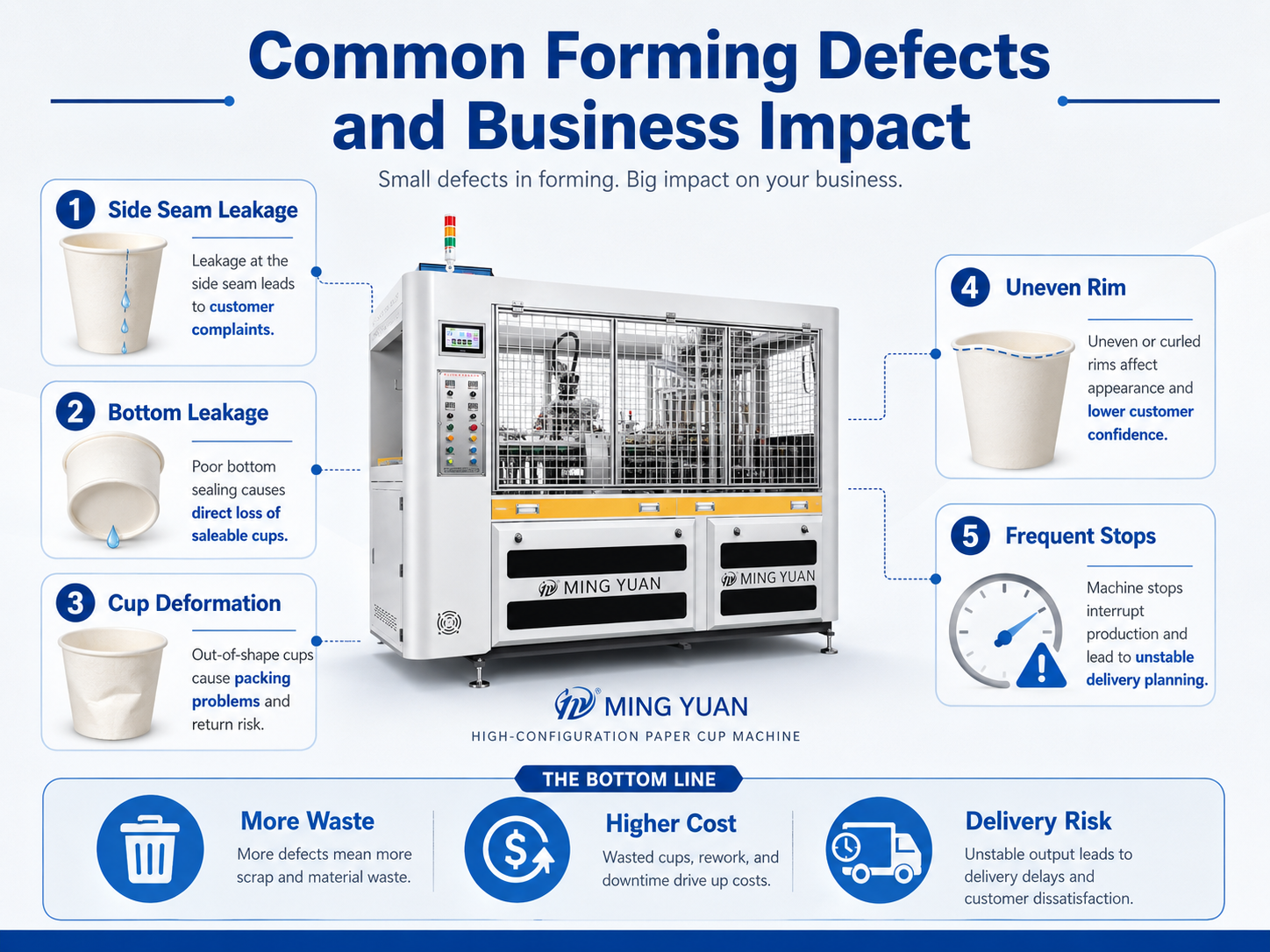
| Defect | Possible Cause | Business Impact |
|---|---|---|
| Side seam leakage | Poor overlap, material mismatch, heating condition, or sealing adjustment | Customer complaints and higher inspection cost |
| Bottom leakage | Bottom paper mismatch, forming pressure, or bottom sealing condition | Direct loss of saleable cups |
| Cup deformation | Unsuitable paper stiffness, mold mismatch, or unstable handling | Poor appearance and packing problems |
| Uneven rim | Curling adjustment, paper quality, or mold condition | Lower customer confidence and possible stacking issues |
| Frequent stops | Feeding inconsistency, material dust, setup, or operator routine | Lower real output and unstable delivery planning |
A useful machine evaluation should not only ask whether cups can be produced. It should ask how many accepted cups can be produced under repeatable conditions.
How to Calculate Real Accepted Output
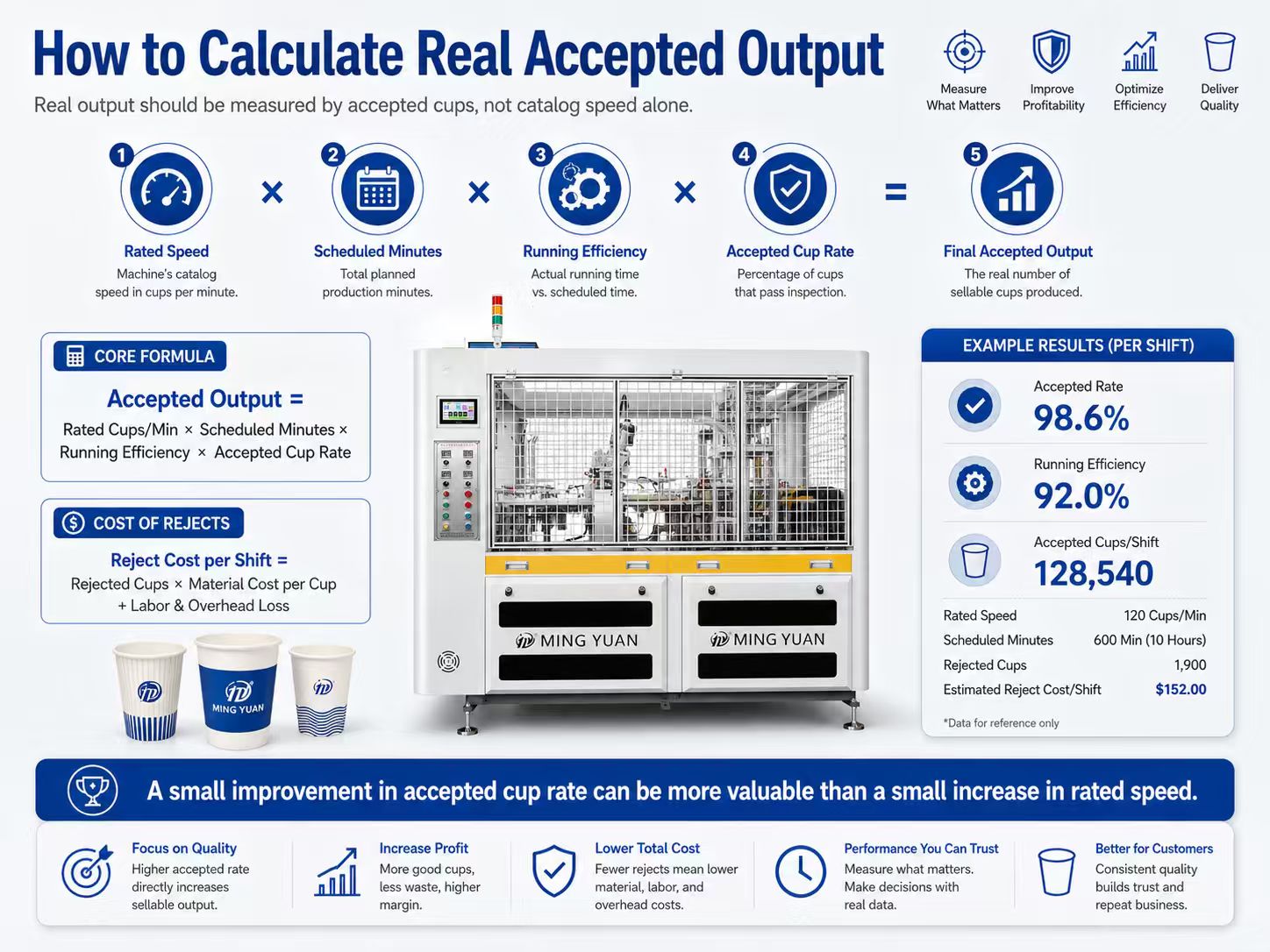
Real output should be calculated from accepted cups that pass inspection and can move into packing. This is more practical than using rated speed alone.
Accepted output formula
Rated cups per minute × scheduled minutes × running efficiency × accepted cup rate
For example, if a machine has high rated speed but needs frequent stops for fan feeding or seam adjustment, the running efficiency falls. If the accepted cup rate drops because of leakage or deformation, the factory pays for paper, labor, and electricity without producing saleable cups.
Reject cost formula
Reject cost per shift = rejected cups × material cost per cup + labor and overhead lost during related stops
A small improvement in accepted cup rate can be more valuable than a small increase in rated speed.
What Inspection Points Should Buyers Use?
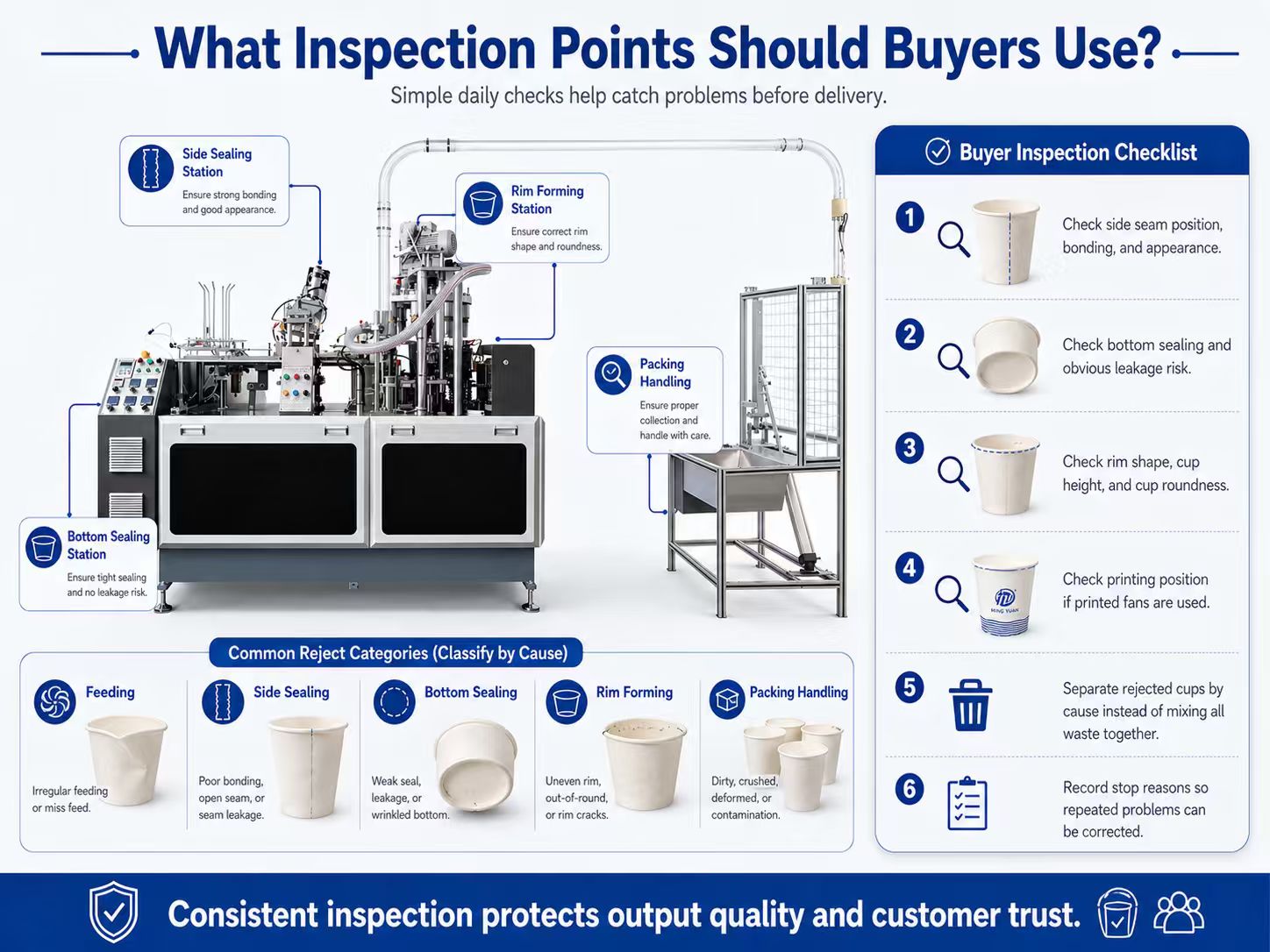
Inspection should be simple enough for daily production but complete enough to catch problems before delivery. A startup factory does not need a complicated system at first, but it needs consistent checks that operators understand.
- Check side seam position, bonding, and appearance.
- Check bottom sealing and obvious leakage risk.
- Check rim shape, cup height, and cup roundness.
- Check printing position if printed fans are used.
- Separate rejected cups by cause instead of mixing all waste together.
- Record stop reasons so repeated problems can be corrected.
Reject classification is important. If most rejects come from material feeding, the solution is different from a bottom sealing problem or a packing handling issue.
Daily Routine That Protects Machine Stability
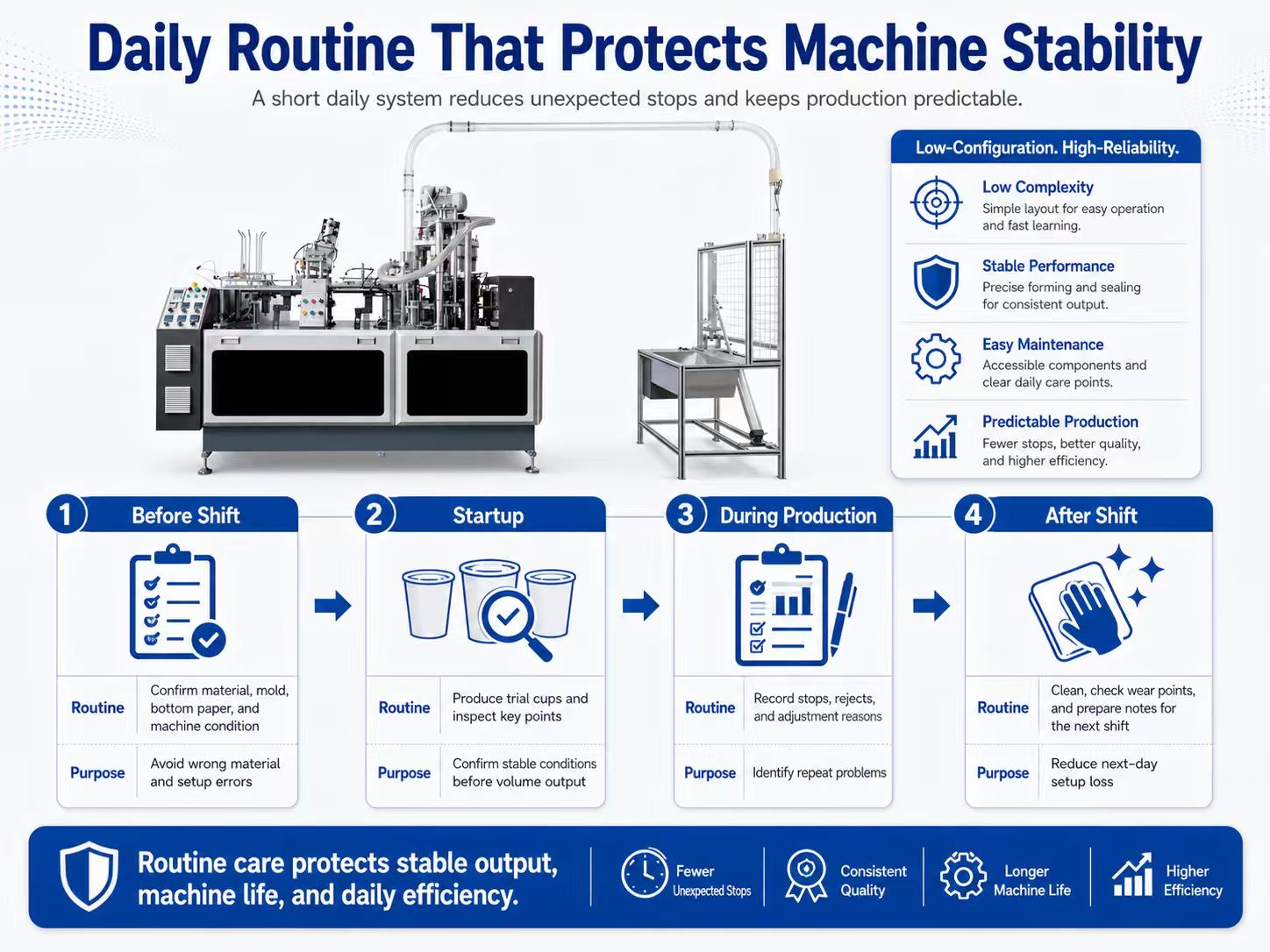
Stable output depends on routine. Operators should not wait for a serious defect before checking the machine. A short daily system can reduce unexpected stops and keep production predictable.
| Time | Routine | Purpose |
|---|---|---|
| Before shift | Confirm material, mold, bottom paper, and basic machine condition | Avoid wrong material and setup errors |
| Startup | Produce trial cups and inspect key points | Confirm stable conditions before volume output |
| During production | Record stops, rejects, and adjustment reasons | Identify repeat problems |
| After shift | Clean, check wear points, and prepare notes for the next shift | Reduce next-day setup loss |
Which Configuration Fits Different Production Goals?
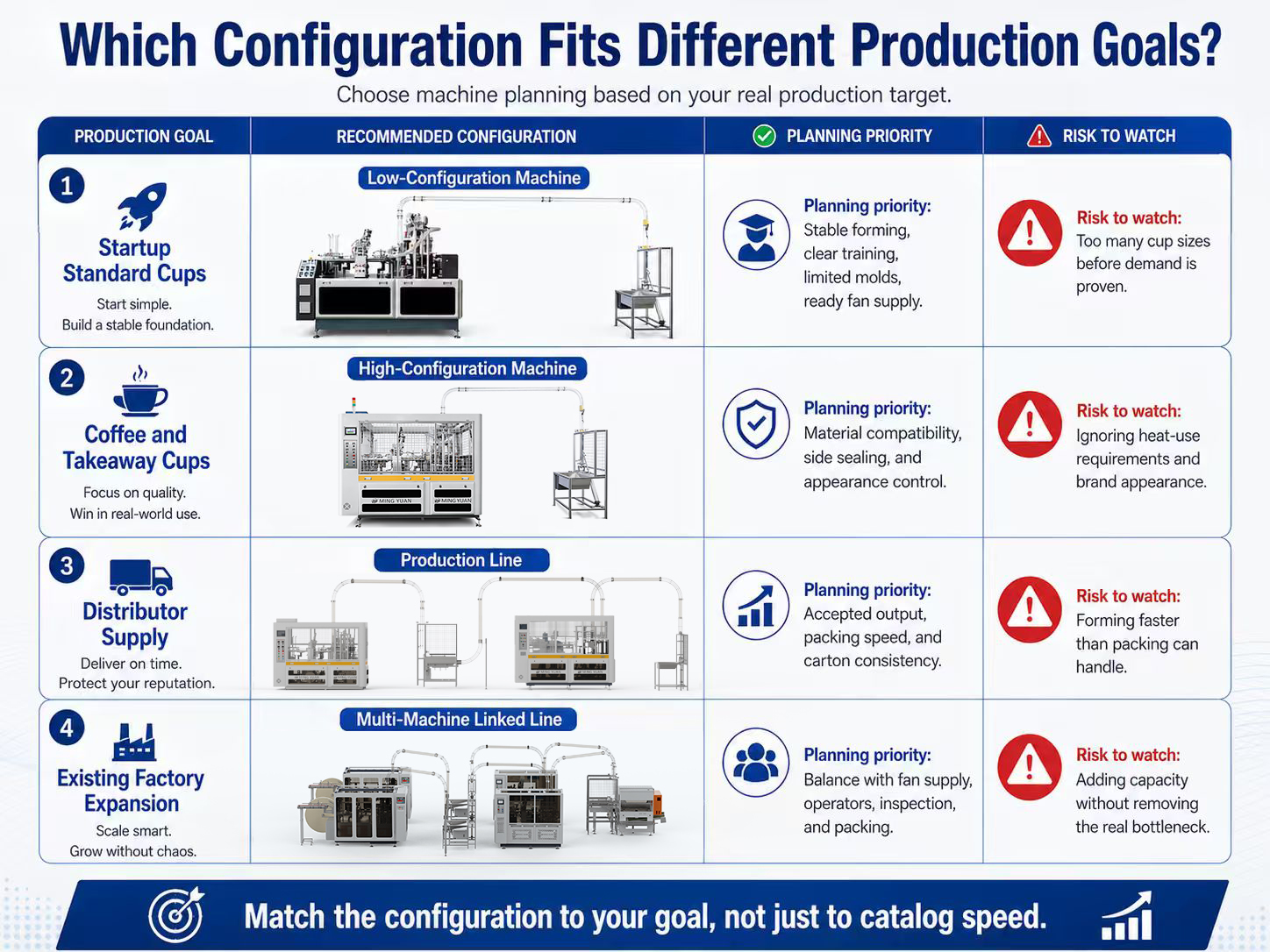
| Production Goal | Machine Planning Priority | Risk to Watch |
|---|---|---|
| Startup standard cups | Stable forming, clear training, limited molds, and ready fan supply | Too many cup sizes before demand is proven |
| Coffee and takeaway cups | Material compatibility, side sealing, and appearance control | Ignoring heat-use requirements and brand appearance |
| Distributor supply | Accepted output, packing speed, and carton consistency | Forming faster than packing can handle |
| Existing factory expansion | Balance with paper cup fan supply, operators, inspection, and packing | Adding capacity without removing the real bottleneck |
A buyer comparing a paper cup machine should ask how the forming system will perform with the intended cup, paper, and packing plan, not only what the catalog speed says.
When Should a Factory Upgrade Forming Capacity?
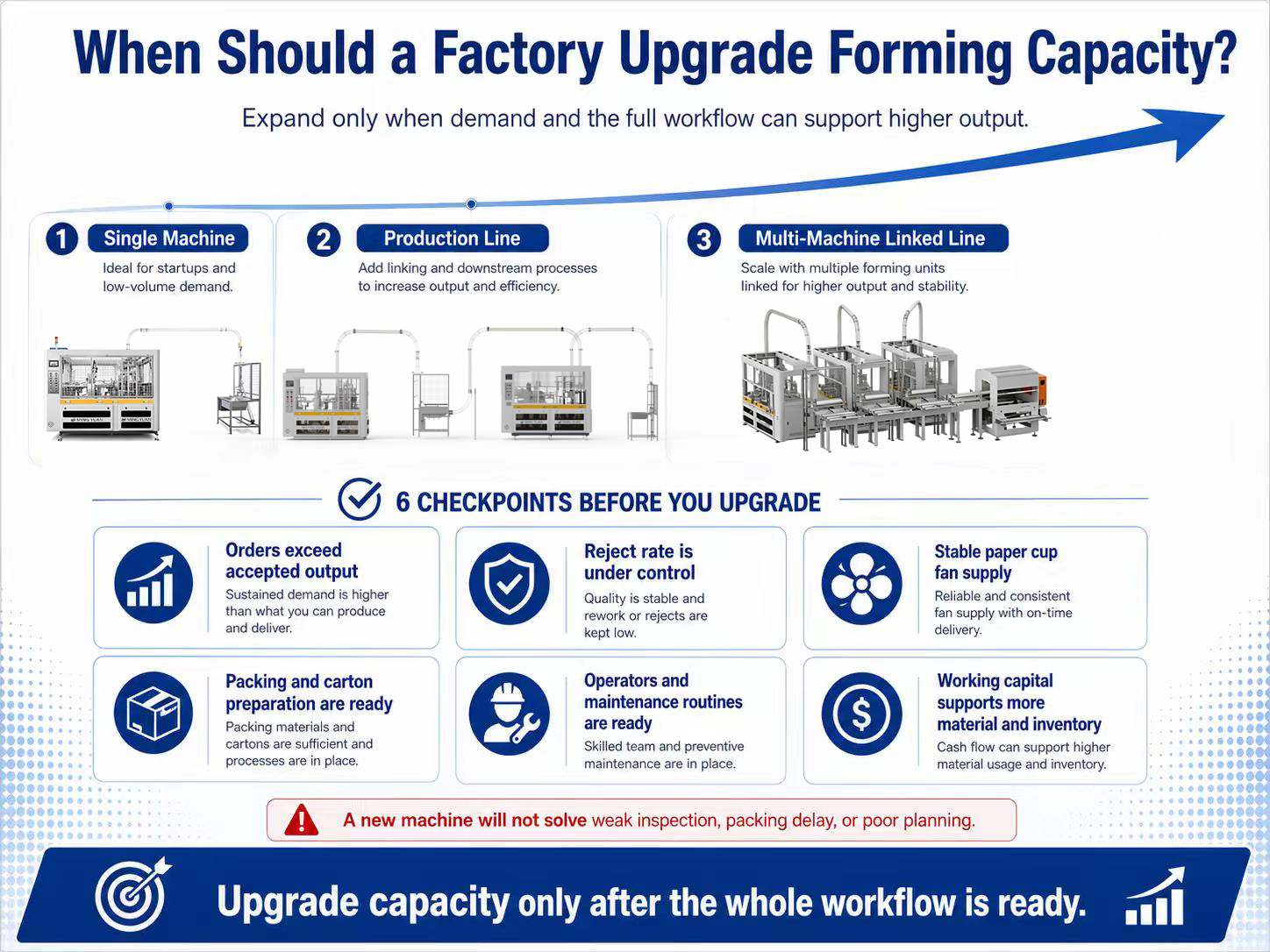
Upgrading forming capacity makes sense when repeated orders exceed practical accepted output and other stages can support the increase. A second forming machine will not solve a shortage of paper cup fans, weak inspection, manual packing delays, or poor order planning.
- Accepted output is consistently below confirmed monthly demand.
- Reject rate is under control and not hiding the real capacity.
- Paper cup fan supply is stable enough for higher production.
- Packing and carton preparation can absorb additional cups.
- Operators and maintenance routines are ready for another machine.
- Working capital can support more material and finished inventory.
Mistakes That Increase Reject Rate
- Changing paper supplier without testing feeding and sealing again.
- Running many small cup sizes without allowing enough setup time.
- Ignoring bottom paper matching when changing cup specifications.
- Counting all waste together instead of separating defect causes.
- Training operators only on start and stop, not on inspection and routine checks.
- Judging machine value only from rated speed and purchase price.
- Letting packing delays hide real forming and quality problems.
Pre-Purchase Stability Checklist
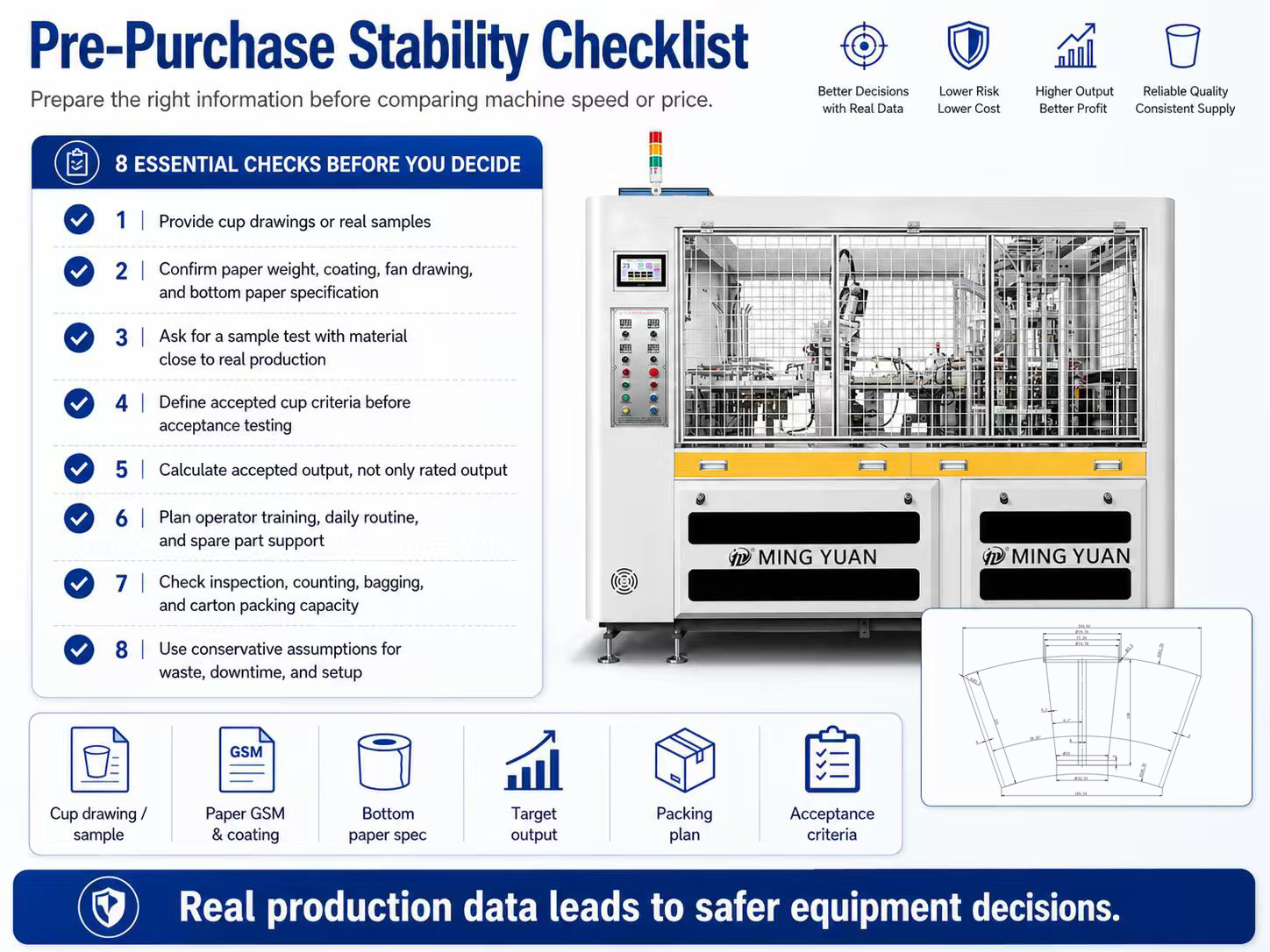
- Provide cup drawings or samples for priority sizes.
- Confirm paper weight, coating, fan drawing, and bottom paper specification.
- Ask for a sample test using material close to real production material.
- Define accepted cup criteria before acceptance testing.
- Calculate accepted output, not only rated output.
- Plan operator training, daily routine, and spare part support.
- Check whether inspection, counting, bagging, and carton packing can keep pace.
- Use conservative assumptions for waste, downtime, and setup during the first production stage.
Frequently Asked Questions
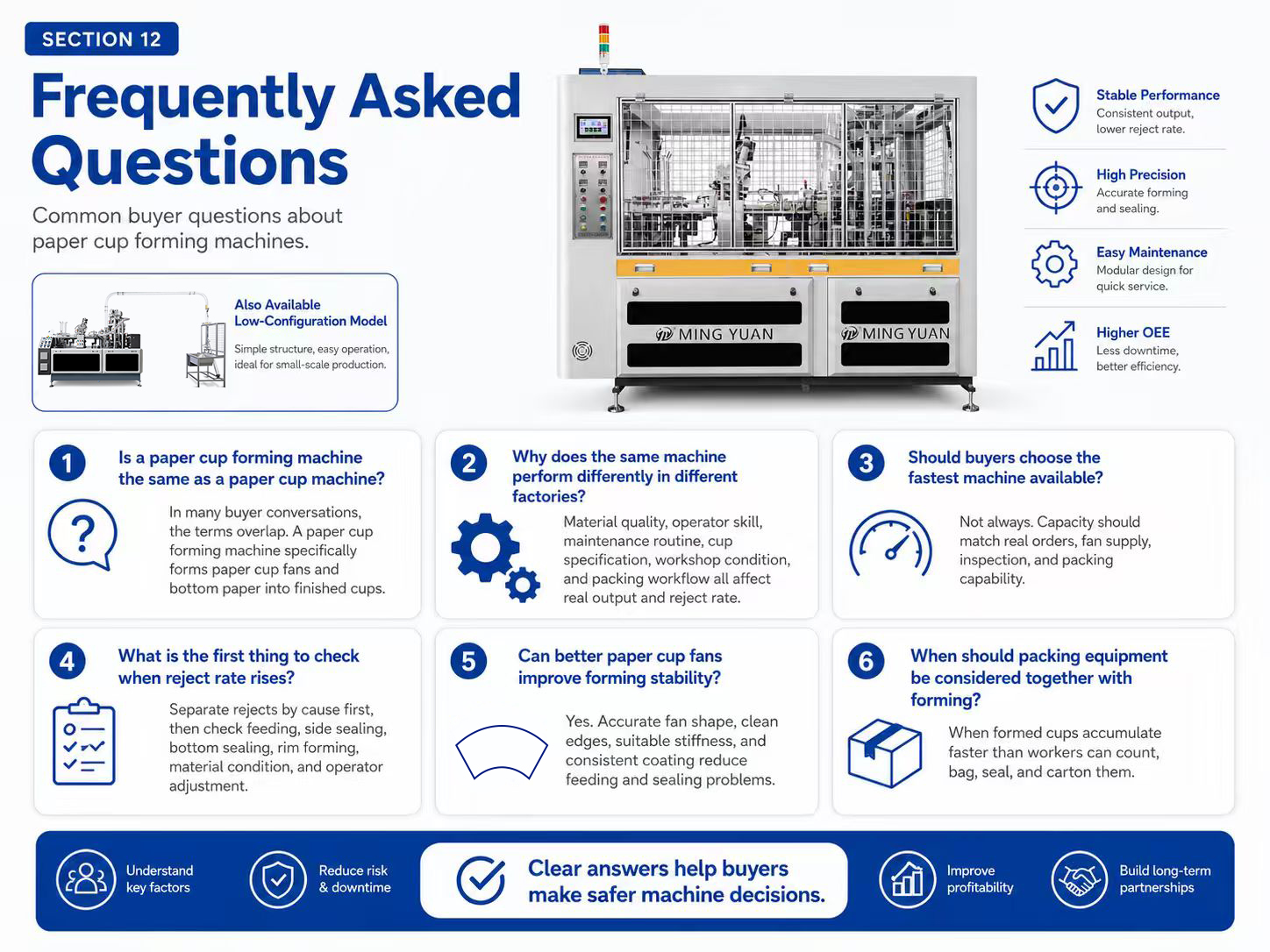
Is a paper cup forming machine the same as a paper cup machine?
In many buyer conversations, the terms overlap. A paper cup forming machine refers specifically to the equipment that forms paper cup fans and bottom paper into finished cup bodies.
Why does the same machine perform differently in different factories?
Material quality, operator skill, maintenance routine, cup specification, workshop condition, and packing workflow can all change real output and reject rate.
Should buyers choose the fastest machine available?
Not always. If orders, fan supply, inspection, and packing do not match the capacity, extra speed may increase pressure without improving delivered sales.
What is the first thing to check when reject rate rises?
Separate rejects by cause first. Check whether the problem comes from fan feeding, side sealing, bottom sealing, rim forming, material condition, or operator adjustment.
Can better paper cup fans improve forming stability?
Yes. Accurate fan shape, clean edges, suitable paper stiffness, and consistent coating can reduce feeding problems and sealing defects.
When should packing equipment be considered together with forming?
Packing should be considered when formed cups accumulate faster than workers can count, bag, seal, and carton them. Otherwise, production speed may turn into a downstream bottleneck.
The Bottom Line
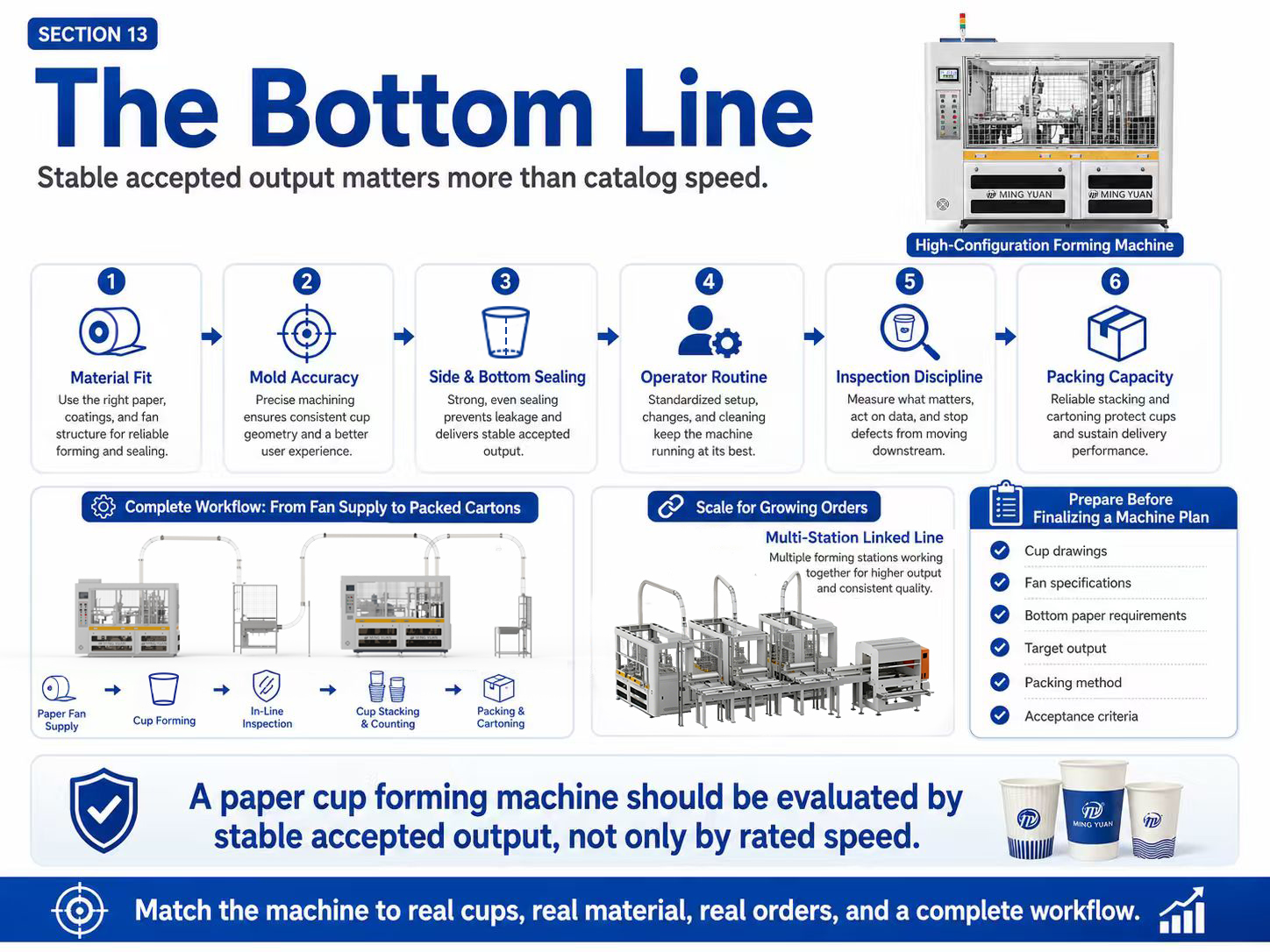
A paper cup forming machine should be evaluated by stable accepted output, not only by catalog speed. Material fit, mold accuracy, side and bottom sealing, operator routine, inspection discipline, and packing capacity all determine whether cups become saleable products.
For buyers, the safest equipment decision is to match the machine to real cup specifications, real material, realistic order volume, and a complete workflow from fan supply to packed cartons.
Before finalizing a forming machine plan, prepare cup drawings, fan specifications, bottom paper requirements, target output, packing method, and acceptance criteria. This makes the quotation more accurate and helps the factory reduce waste from the first stage of production.