 English
 Pусский
 Français
 Español
Table of Contents
- When does a fully automatic paper cup machine make business sense?
- What does fully automatic mean in paper cup production?
- What should buyers confirm before choosing automation?
- How should buyers calculate real output?
- How can buyers compare automation cost and labor savings?
- Which buyers benefit most from a fully automatic machine?
- Why upstream and downstream planning still matters
- Common mistakes when buying a fully automatic machine
- Pre-purchase checklist
- FAQs
- The Bottom Line
When Does a Fully Automatic Paper Cup Machine Make Business Sense?
A paper cup machine fully automatic setup can reduce repeated manual work and support stable production, but it is not automatically the best first investment for every factory. The right decision depends on confirmed orders, cup sizes, paper cup fan supply, labor cost, qualified output, packing capacity, and the buyer's ability to keep the machine running consistently.
Many buyers compare machines by rated speed and automation level. However, a faster machine does not create profit when orders are irregular, materials are unstable, changeovers are frequent, or downstream packing cannot keep up. Automation creates value only when the factory can feed it with stable materials, stable orders, and a balanced production workflow.
This guide is for startup factories, local packaging distributors, coffee cup suppliers, and existing manufacturers considering an upgrade. It explains what fully automatic production means, how to calculate real output, and when a paper cup machine with higher automation can improve business results rather than simply increase equipment cost.
What Does Fully Automatic Mean in Paper Cup Production?
In practical paper cup production, fully automatic usually means that the forming machine completes the main cup-forming cycle continuously after materials are loaded and settings are confirmed. Typical operations include feeding the paper cup fan, forming and sealing the sidewall, feeding bottom paper, attaching the bottom, heating or sealing, knurling, curling the rim, and discharging the finished cup.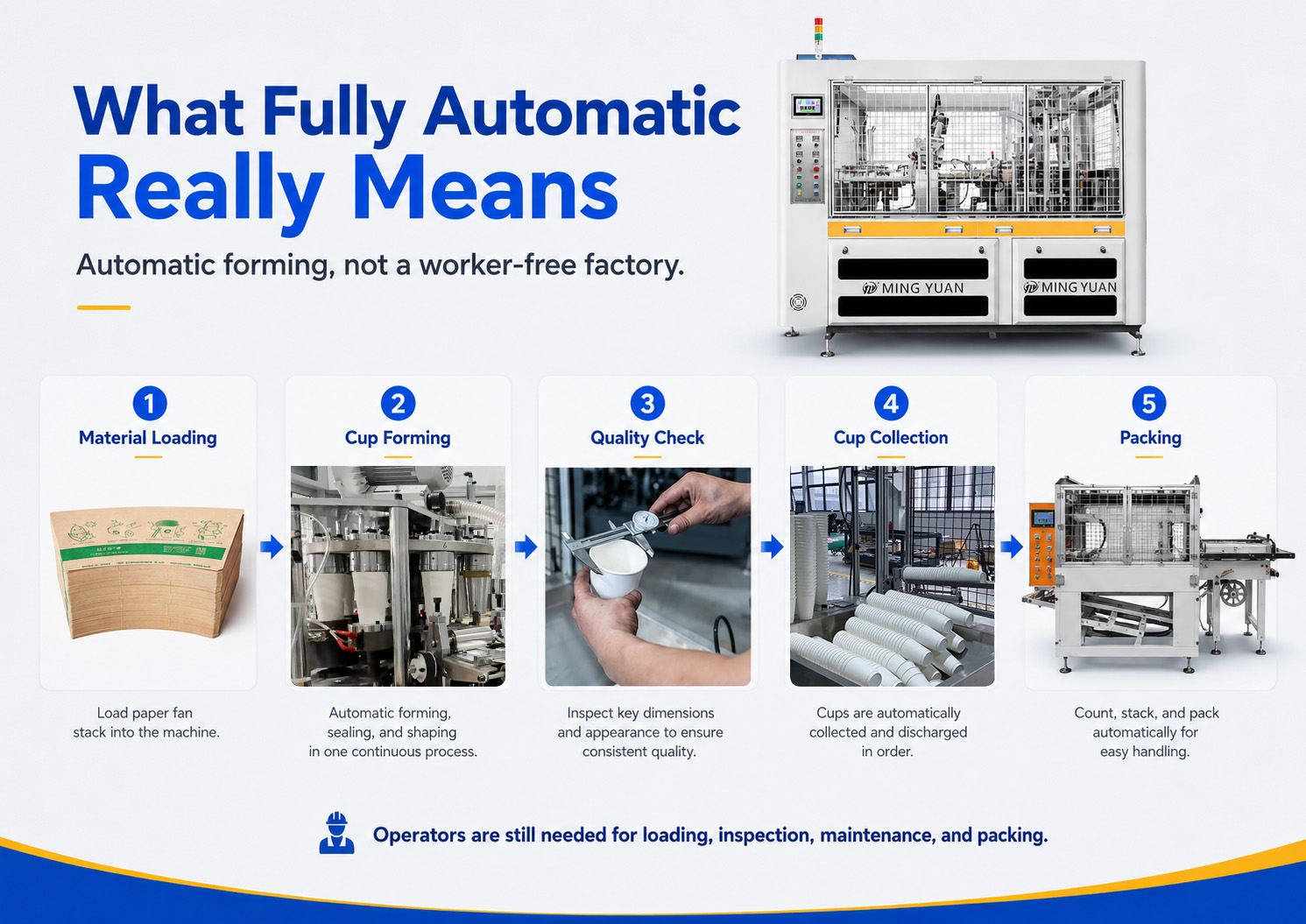
The word automatic does not mean the factory runs without people. Workers are still needed for material preparation, machine setup, quality checks, refilling, maintenance, finished cup handling, packing, and production records. The amount of labor depends on machine configuration, cup type, workshop layout, and whether upstream and downstream processes are connected.
| Production Task | Machine Role | Worker Role |
|---|---|---|
| Cup forming cycle | Completes repeated forming operations automatically. | Monitors operation and checks abnormal conditions. |
| Material supply | Feeds prepared fans and bottom paper during production. | Prepares, loads, and verifies suitable material. |
| Quality control | Provides repeatable forming under stable conditions. | Checks sealing, leakage, rim shape, and appearance. |
| Packing and delivery | May discharge or count cups depending on the line. | Handles packing unless downstream automation is included. |
Buyer note: fully automatic forming does not automatically mean a fully automatic factory. Buyers should evaluate the entire workflow from paper cup fan preparation to packed finished cups.
What Should Buyers Confirm Before Choosing Automation?
Automation should solve a visible production problem. Before choosing a fully automatic paper cup making machine, the buyer should confirm where orders come from, which cups sell repeatedly, how materials will be supplied, and which production stage currently limits delivery.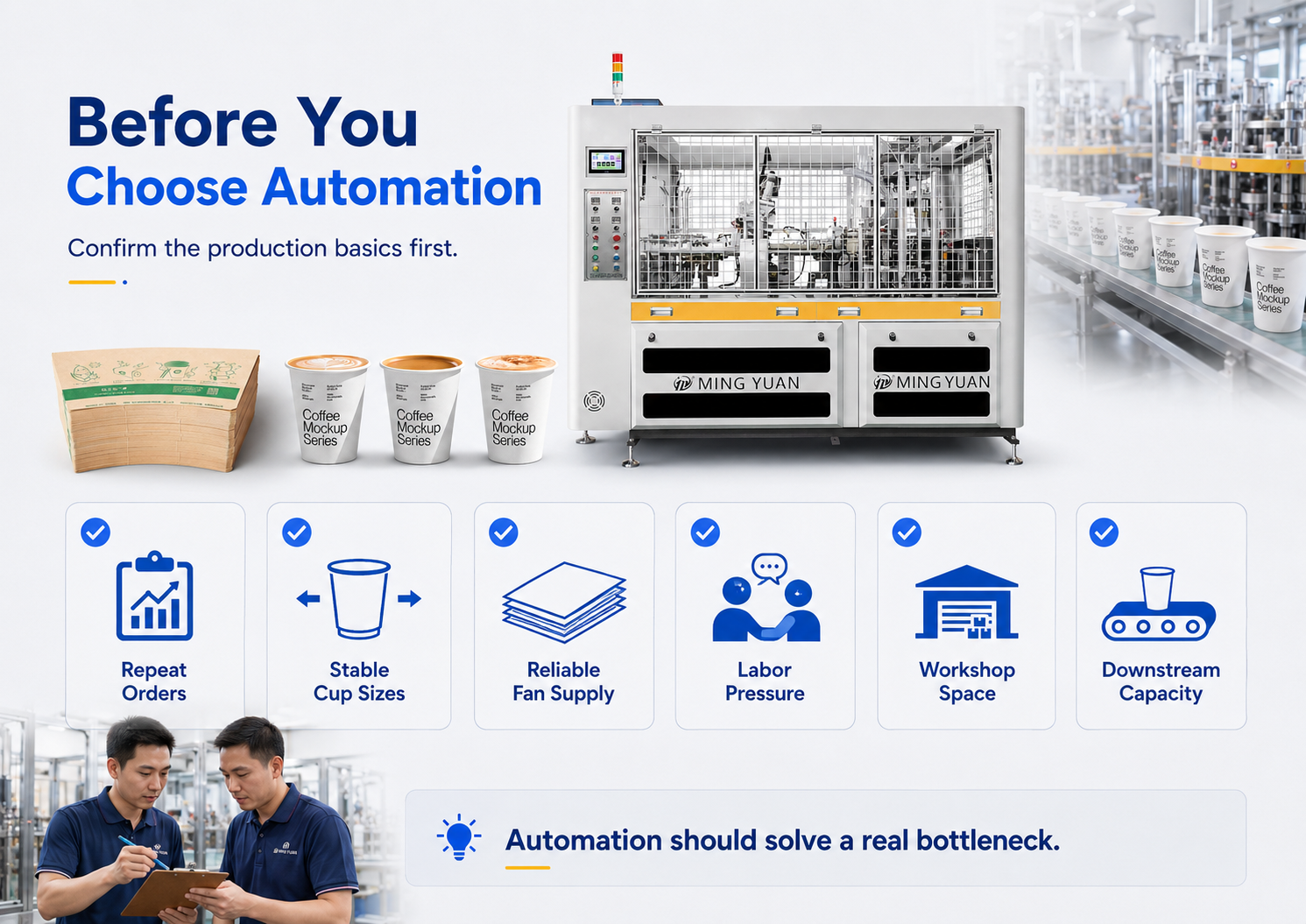
| Question to Confirm | Why It Matters | Warning Sign |
|---|---|---|
| Are monthly orders stable? | Stable orders create enough machine utilization to justify automation. | The buyer only has optimistic sales estimates and no repeat customers. |
| Are cup sizes standardized? | Repeated sizes reduce changeover pressure and simplify material inventory. | Customers request many low-volume sizes and frequent changes. |
| Is paper cup fan supply reliable? | Stable material quality supports qualified output and less adjustment. | Fan cutting, coating, or printing quality changes between batches. |
| Can packing absorb the output? | Faster forming has little value when finished cups wait for packing. | Workers already struggle to count, bag, and carton current output. |
How Should Buyers Calculate Real Output?
Rated speed is useful for comparing machine classes, but it should not be treated as guaranteed sellable output. Actual production includes material loading, adjustment, cup-size changes, cleaning, inspection, maintenance, and rejected cups. Buyers should calculate qualified output based on stable working conditions.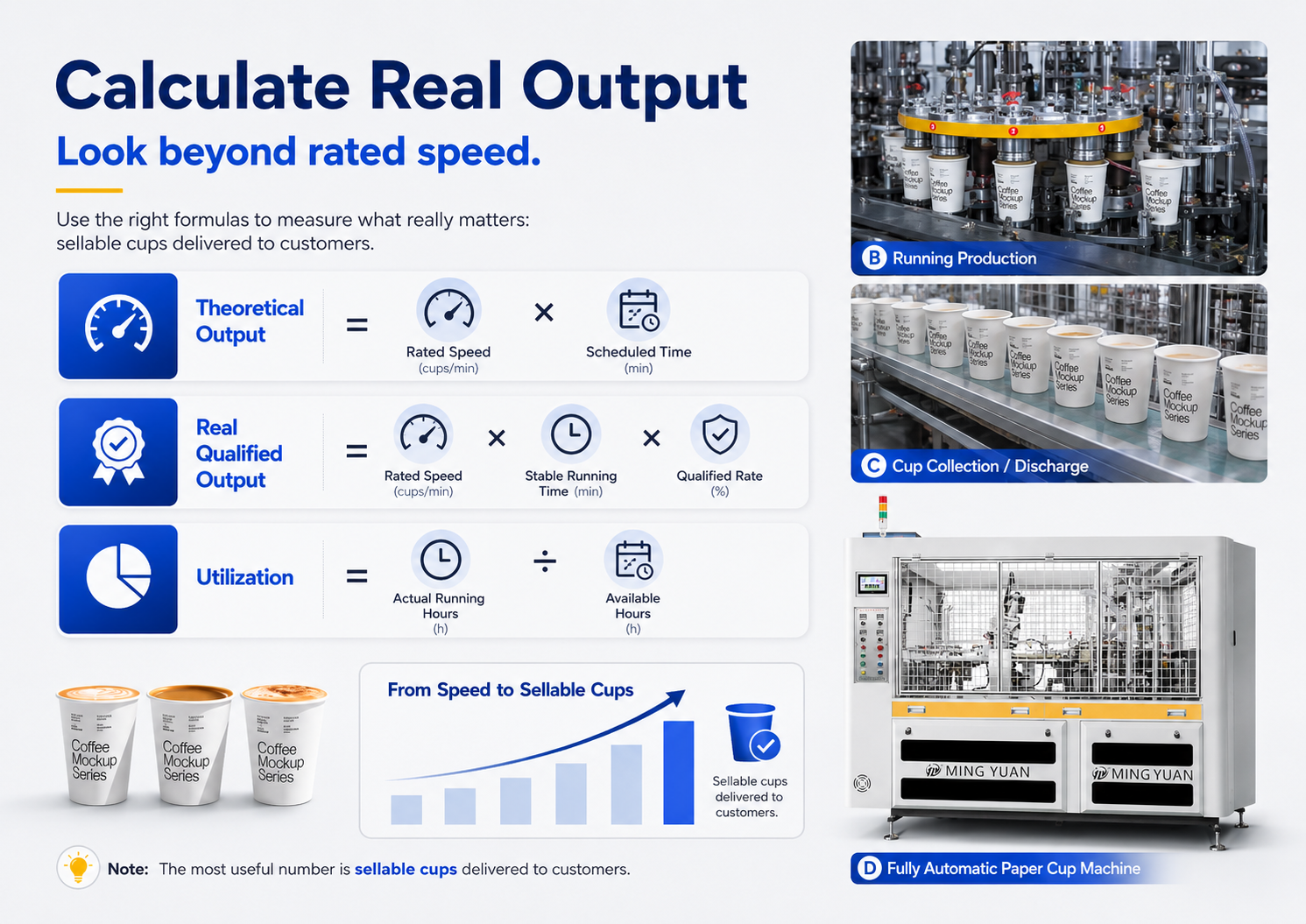
| Calculation | Simple Formula | Business Meaning |
|---|---|---|
| Theoretical output | Rated Speed x Scheduled Production Time | Shows the maximum planning reference before downtime and rejection. |
| Real qualified output | Rated Speed x Stable Running Time x Qualified Rate | Estimates cups that can actually move into packing and delivery. |
| Machine utilization | Actual Running Hours / Available Production Hours | Shows whether the factory has enough orders and materials to use the equipment. |
A higher-speed machine may have lower economic value than a moderately sized machine if utilization is low. The most useful output number is qualified cups delivered to customers, not cups formed during a short speed demonstration.
How Can Buyers Compare Automation Cost and Labor Savings?
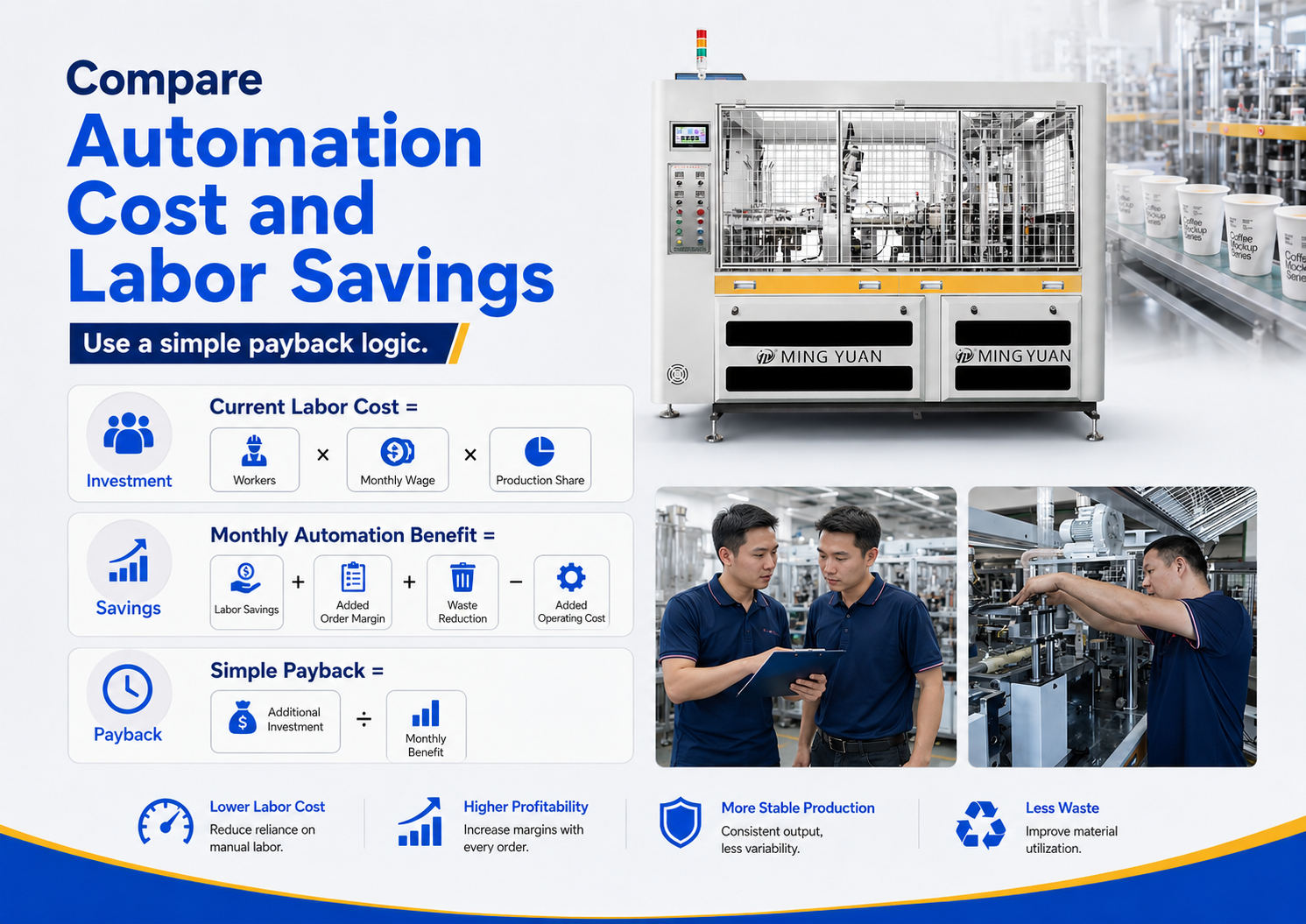
The value of automation should be compared with the current cost of labor, waste, downtime, missed orders, and inconsistent delivery. A machine purchase is easier to evaluate when the buyer separates one-time investment from monthly operating benefits.
| Decision Item | Planning Formula | What to Include |
|---|---|---|
| Current monthly labor cost | Workers x Monthly Wage x Production Share | Operators, material handling, inspection, and packing labor related to the process. |
| Monthly automation benefit | Labor Savings + Added Order Margin + Waste Reduction - Added Operating Cost | Use conservative order and savings assumptions. |
| Simple payback period | Additional Automation Investment / Monthly Automation Benefit | Shows how long the additional investment may take to recover. |
This calculation should not use the highest possible output or best possible sales forecast. It should use normal production conditions and repeat orders that the buyer can realistically maintain. If the result depends on running at maximum speed every day, the investment plan may be too optimistic.
Which Buyers Benefit Most From a Fully Automatic Machine?
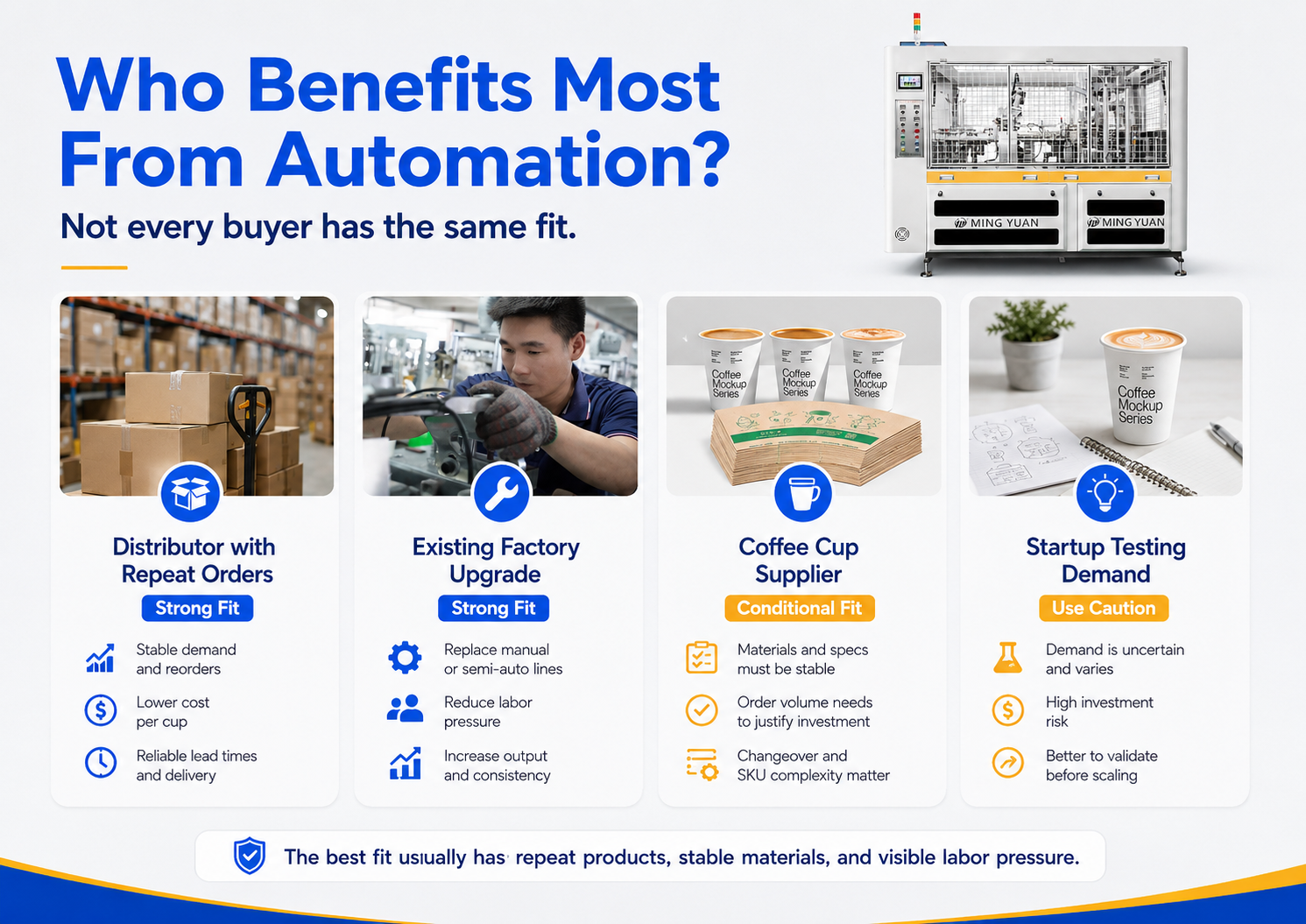
Different buyers receive different value from automation. The best candidate is usually a factory with repeated products, reliable materials, and visible labor or capacity pressure.
| Buyer Scenario | Automation Fit | Reason |
|---|---|---|
| Startup testing local demand | Use caution | The buyer may need flexibility and controlled investment more than maximum capacity. |
| Distributor with repeated standard cup orders | Strong fit | Stable sizes and repeated delivery create higher utilization. |
| Coffee cup supplier with branded customers | Conditional fit | Works well when printed fan supply and cup specifications are stable. |
| Existing factory replacing labor-intensive equipment | Strong fit | Current production records can support a realistic savings calculation. |
| Factory with many small custom orders | Review carefully | Frequent material and size changes may reduce utilization. |
Why Upstream and Downstream Planning Still Matters
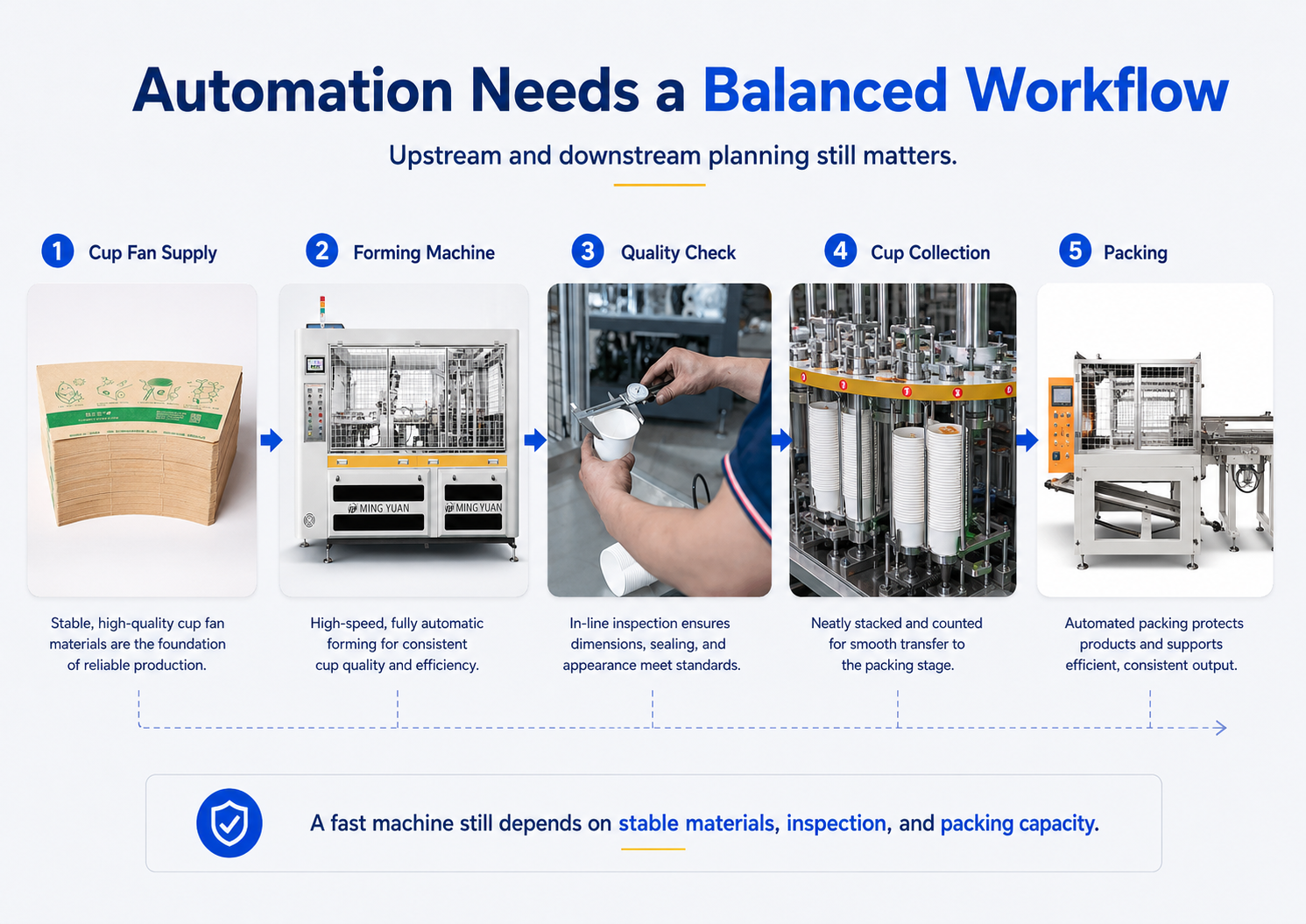
A fully automatic paper cup production machine can only perform consistently when the surrounding workflow supports it. Upstream, the factory needs suitable paper cup fans, bottom paper, printing quality, and die cutting accuracy. Downstream, it needs inspection, counting, bagging, sealing, carton preparation, and finished goods storage.
- If fan supply is unstable: the machine may stop for adjustment or produce more rejected cups.
- If printing and die cutting are delayed: machine capacity remains unused while orders wait for material.
- If inspection is weak: defects may reach packing and increase customer complaints.
- If packing is slower than forming: finished cups accumulate and require more handling space.
The factory should automate the actual bottleneck, not automatically choose the machine with the highest speed. In some factories, the best next investment is material preparation or packing rather than another forming machine.
Common Mistakes When Buying a Fully Automatic Machine
- Choosing rated speed before confirming monthly repeat orders.
- Assuming automation removes the need for trained operators and quality control.
- Ignoring paper cup fan quality, cutting accuracy, and coating compatibility.
- Buying high capacity while offering too many low-volume cup sizes.
- Calculating output without downtime, rejected cups, and changeovers.
- Adding forming capacity without improving inspection and packing capacity.
- Comparing machine price without calculating total line investment and operating cost.
The biggest automation mistake is buying capacity for future hopes while the current order, material, and packing systems are not ready.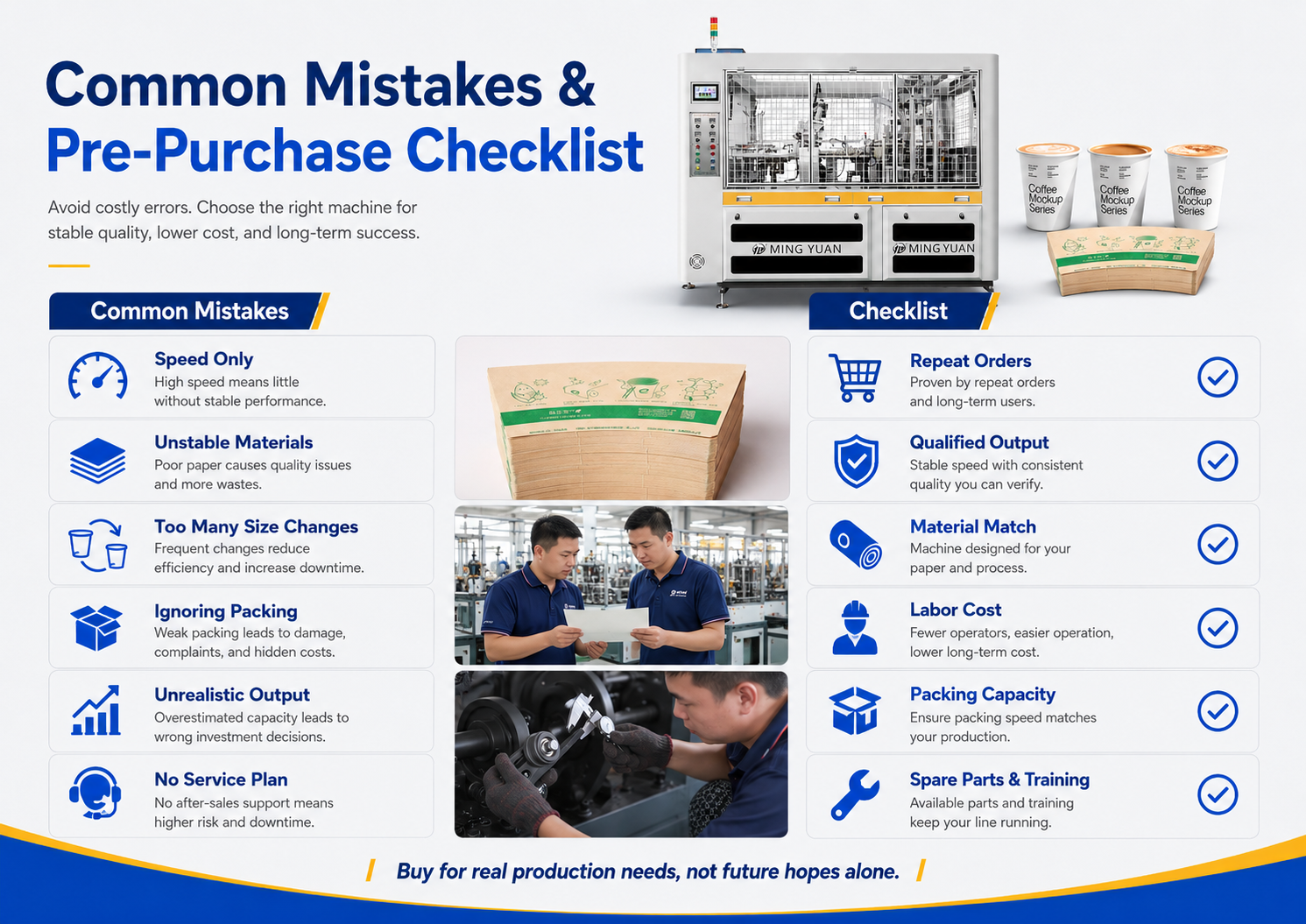
Pre-Purchase Checklist
- List the cup sizes that generate repeated monthly orders.
- Estimate real qualified output instead of using rated speed alone.
- Confirm paper cup fan, bottom paper, coating, and printing requirements.
- Calculate current labor cost, waste, downtime, and missed order cost.
- Check whether inspection and packing can handle the planned output.
- Plan workshop space for materials, machine access, cup flow, and finished goods.
- Confirm training, maintenance, mold support, and spare-part planning.
- Use conservative sales assumptions when calculating payback.
FAQs
Is a fully automatic paper cup machine suitable for a startup?
It can be suitable when the startup already has confirmed orders, standardized cup sizes, reliable fan supply, and enough working capital. A buyer who is still testing demand may benefit more from a controlled modular setup.
Does higher machine speed always reduce cup cost?
No. Cost falls only when the factory maintains good utilization, qualified output, low waste, and balanced packing. Low utilization can make a faster machine more expensive per sellable cup.
How many workers does an automatic paper cup machine need?
The answer depends on material handling, machine configuration, quality inspection, cup sizes, and packing method. Buyers should calculate labor for the complete workflow, not the forming machine alone.
Should I add a faster forming machine or packing automation first?
Check the current bottleneck. If cups already wait for counting and bagging, packing automation may create more value. If packing has spare capacity but forming limits delivery, a faster forming machine may be justified.
What information should I prepare before requesting a machine recommendation?
Prepare target cup sizes, cup applications, material type, expected monthly volume, working hours, packing requirements, available workshop space, and future product plans.
The Bottom Line
A paper cup machine fully automatic investment makes business sense when the factory has repeat orders, stable materials, standardized products, measurable labor pressure, and enough downstream capacity. Automation should improve qualified output and delivery reliability, not simply increase rated production speed.
The right machine is the one the factory can keep productively occupied with profitable orders. Buyers should calculate real output, machine utilization, total workflow cost, and payback under normal operating conditions before choosing the automation level.