 English
 Pусский
 Français
 Español
Unplanned downtime on cup-forming equipment rarely comes from catastrophic component failure. In most cases, the root cause traces back to neglected daily checks—specifically around lubrication and mould condition. When a line stops unexpectedly, the operator often finds a dry bearing surface or a worn mould insert that could have been caught hours or days earlier.
A structured daily inspection routine, performed consistently before each shift, catches these issues at their earliest stage. The following three checks address the most common failure points on high-speed forming machinery. They require minimal tools and take about 15 minutes.
Check 1: Oil Lubrication System Condition
Oil level alone tells you very little. Oil degrades through oxidation, accumulates microscopic metal particles, and loses viscosity over time—especially in high-speed forming stations where component clearances are tight.
Measure the oil return line temperature with an infrared thermometer. On a machine running standard PE-coated paper stock, a healthy circulation system maintains oil temperature between approximately 40°C and 55°C. Readings above 65°C typically indicate excess friction somewhere in the drive train, or an underperforming oil cooler. Pull a small oil sample from the drain point. Hold it up to the light. Dark streaks suggest internal wear particles circulating through the system; a milky appearance points to water contamination from condensation or a coolant seal leak.
Listen to the machine during the warm-up cycle. A properly lubricated cam-driven indexing mechanism produces a consistent low hum. An intermittent high-frequency squeak during station indexing often indicates a blocked oil nozzle at one lubrication point. If you hear it, stop the cycle and trace the noise before resuming production.
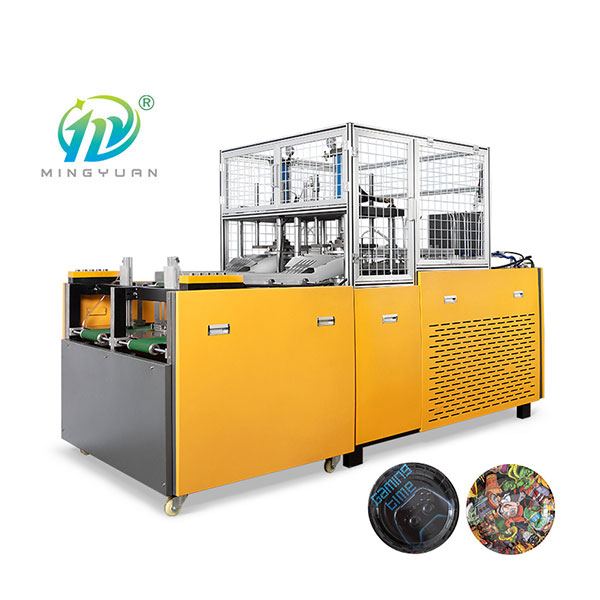
How the lubrication system is designed directly impacts how long these checks remain effective. Some equipment, such as a well-engineered Paper Cup Machine, incorporates automatic oil circulation with integrated filtration, which reduces the frequency of manual intervention and helps maintain stable operating temperatures across long runs.
Check 2: Mould Condition Assessment
Mould wear doesn't just produce defective output—it creates cascading damage to other components. A bottom die with excessive clearance transmits shock loads back through the cam followers, accelerating bearing wear throughout the indexing unit.
Pull the first three pieces of output each morning. Roll the rim between your thumb and forefinger. A correctly formed rim feels uniformly stiff around the entire circumference. Soft spots on one section suggest a cold zone in the heated curling die, often caused by a failing cartridge heater or carbon buildup on the die face. Measure output height with a go/no-go gauge. Height variation exceeding ±0.5mm across three consecutive pieces indicates wear in the top forming die compression stage.
Inspect mould surfaces under bright light. A bluish discolouration on steel surfaces signals overheating, frequently from blocked air cooling holes. Use a pin gauge to clear each hole—this takes two minutes and helps prevent scored die sets. When running PLA-coated paper, which typically requires higher forming temperatures between 180°C and 220°C, inspect moulds twice per shift; these elevated temperatures accelerate surface oxidation on tooling.
Check 3: Pneumatic System and Sensor Integrity
Compressed air quality directly affects transfer and ejection consistency. Moisture in air lines corrodes solenoid valve internals, causing sluggish response that operators often misdiagnose as a timing issue.
Drain the water trap on the air preparation unit at the start of each shift. If you find more than a teaspoon of accumulated water, your facility's air dryer system needs evaluation. Manually cycle each vacuum suction cup through the HMI and test its grip against a piece of paper stock. A cup that releases slowly or grips unevenly usually has a cracked silicone pad or a restricted vacuum line.
Photoelectric sensors on the paper fan feeding station and the discharge chute accumulate dust rapidly in this operating environment. Wipe each sensor lens with a dry microfiber cloth only—wet wipes leave a residue film that attracts more dust. After cleaning, check the signal stability indicator on the PLC input monitor. A flickering signal under steady-state conditions indicates either misalignment or a weakening emitter, both of which can cause intermittent misfeeds that are difficult to diagnose during production runs.
For those managing multiple machines, it can be helpful to review forming equipment specifications that detail sensor layouts and pneumatic circuit design, making daily inspection points easier to identify and access.
Building a Sustainable Inspection Habit
Document each morning's findings in a simple log. Record oil temperature, any unusual noises, mould condition notes, and water trap drainage amount. This log serves two purposes: it reveals gradual trends (like slowly rising oil temperature over weeks) that a single inspection would miss, and it creates accountability for the inspection routine itself. Review the log weekly. A temperature increase of even 5°C over a month warrants investigation before it becomes a breakdown.
For operations running multiple shifts, ensure the handover includes these three checkpoints. The incoming operator should verify each one independently rather than relying on the previous shift's report.
Consistent daily inspection practices are the most effective way to extend the service life of forming equipment. If you are evaluating machinery built to simplify these routines, Mingyuan's forming equipment line integrates automated monitoring features that support proactive maintenance.